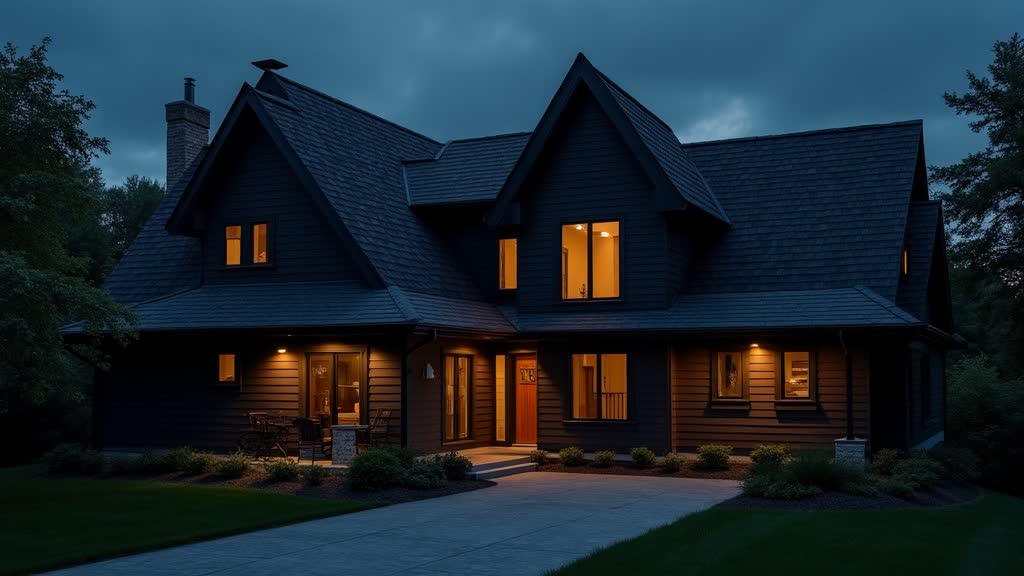
Tile Roofing in St. Petersburg, FL:
New Underlayment, Tile Set Back Right.
Tile roofing in St. Petersburg for clay barrel and concrete tile homes, from the Mediterranean Revival houses in the old districts to newer tile neighborhoods. On most tile roofs the tile is fine and the felt under it is not, so we lift it, lay new underlayment and set the good tile back.
Takes about 30 seconds. A local roofing specialist follows up the same business day.
Tile Roofing in St. Petersburg Starts Below the Tile
Tile roofing in St. Petersburg gets judged by what you can see from the street: the red barrel tile on a Mediterranean Revival house, the gray flat tile on a newer home. That part usually holds up. Clay and concrete both shrug off sun and rain for a very long time.
The part that fails sits underneath. A tile roof is two systems stacked on each other. The tile sheds most of the water and takes the heat. The underlayment below it is the actual waterproof layer, and every tile roof lets some rain through to it, especially when a summer storm pushes water uphill between the laps. When that layer is sound, nobody notices. When it isn’t, the stain shows up inside while the tile above still looks perfect.
So on any tile roof, we first work out which layer is the problem. Sometimes it’s a cracked tile. Usually it’s the felt.
Spanish and Mediterranean Tile Across St. Petersburg
The city’s own design guidelines put tile right in its history. Granada Terrace, on Coffee Pot Bayou in the Old Northeast, was platted by C. Perry Snell in February 1924. Its deed restrictions required custom Mediterranean Revival houses, and the guidelines note that many have Spanish tile roofs or parapet caps. Snell opened Snell Isle the next year, in October 1925, on filled bay bottom.
Beyond the old districts, we find tile on all kinds of St. Petersburg homes: bayfront houses, newer block homes and subdivisions where concrete tile was the standard choice. Clay tends to show up as barrel tile on the older and Spanish-style houses. Concrete comes in barrel, S-shaped and flat profiles and is the more common of the two on newer roofs.
The two are handled differently. Clay is lighter per piece but more brittle, and an old clay profile can be hard to match. Concrete is heavier and tougher underfoot. On a house with parapet walls, the caps along the top of the wall and the flat roof sections hidden behind them get checked along with the tile.

Why the Underlayment Wears Out First
Tile lasts for decades. The felt or membrane under it has a much shorter working life, and in St. Petersburg it works hard. Attic heat bakes it from below. Sun reaches it at every gap and broken piece. Wind-driven rain runs down it every summer afternoon.
Over time the underlayment dries out, shrinks and cracks, most often at the eaves, in the valleys and around anything that pokes through the roof. Mortar at the ridges and hips cracks too, and the flashing at walls and chimneys rusts faster near the bay. None of this shows from the driveway.
Signs that the layer under your tile is done:
- A ceiling stain with no broken tile above it. The most common tile leak we see.
- Stains that grow after heavy rain, then dry out. Water is reaching the deck and leaving again.
- Soft spots or dark staining on the deck, seen from the attic.
- Loose ridge or hip tile, where old mortar has let go.
- Lifted or rusted flashing at walls, valleys and pipes.
For a single active leak, our roof leak repair page covers how we trace and stop it. This page is about the roof as a whole.
Three Ways to Fix a Tile Roof
Tile gives you more choices than most roofs, because the expensive part, the tile, can often be saved.
- Spot repair. Cracked tile replaced and a flashing detail fixed, with the underlayment left alone because it’s still sound. This is ordinary roof repair.
- Lift and reset. The underlayment has failed on one slope or around one valley. The tile in that area comes off by hand, new underlayment goes down, and the same tile goes back with replacements for any that crack.
- Full underlayment replacement. The underlayment is failing across the roof. Every tile comes up, the deck is checked and re-nailed, new underlayment and flashing go on, and the tile is reset. If the tile itself is worn or brittle, new tile goes on instead. That’s a full roof replacement.
Florida’s 25% rule shapes which one makes sense. Under the Existing Building Code, no more than 25% of a roof or roof section can be repaired or replaced in 12 months unless the whole roof or section meets current code. A state law softens that for roofs built, repaired or replaced under the 2007 Florida Building Code or later: only the part being worked on has to meet current code. A lot of older tile roofs in St. Petersburg predate 2007, so the rule matters here.
When a Tile Repair Turns into a Whole Roof
Broken Tile After Milton
Milton put a measured 101 mph gust over Albert Whitted Airport in October 2024, with 18.88 inches of storm rain at the same station. Helene had come through two weeks before. Tile is heavy, and that weight helps it stay put, but wind still finds the edges, the hips, the ridges and any tile whose fastening or mortar had aged. Branches and debris crack tile in the middle of a slope.
A cracked tile is a small thing until the next rain. The water it lets in goes straight to the underlayment, and if that layer was already tired, the leak follows fast. Missing ridge tile opens the top of the roof to rain.
After a storm, look from the ground, not from a ladder. Pieces of tile in the yard, gaps along the ridge and tile that sits crooked are all worth a call. The city requires a permit for all storm-damage repair, tile included. We give you a documented photo report you can share with your insurer, and the claim stays between you and them. More on storm work is on our storm damage roof repair page.
Walking a Tile Roof Without Breaking It
A lot of broken tile in St. Petersburg comes from people, not wind. A satellite installer, a pressure washer or someone checking the AC lines steps in the middle of a barrel tile and it cracks. Sometimes the crack doesn’t show until the next storm.
We move on tile with care. We step low on each tile, where it rests on the course below, and stay off the tops of barrels and the unsupported noses. We bring spare tile so anything that cracks is replaced before we leave. Slopes we can read without walking, we photograph from the ladder, and the high-resolution imagery we measure from fills in the layout. If you have other trades coming, ask them to call before they climb.
How We Move on a Tile Roof
- Where we stepThe lower third of each tile, where it rests on the one below
- What we avoidBarrel tops, unsupported noses and the middle of a span
- What we photograph insteadSlopes we can read from a ladder or from the imagery
- Before we startSpare tile on hand, so a cracked piece gets swapped during the job
Historic District Tile: Like for Like or a Change
A historic house changes how a tile job starts. Inside a local historic district, or on a local landmark, City Code requires a Certificate of Appropriateness before any exterior change, and the roof is the first example the code gives.
The city’s approval matrix splits it two ways. Replacing tile with the same material and shape is a staff approval, whether the house is contributing or not. Changing the material or the shape, such as clay tile to metal or to shingle, goes to the Community Planning and Preservation Commission for landmarks and contributing houses, and staff can handle it for non-contributing ones. The city’s design guidelines favor materials that match the original and discourage changing a roof shape that can be seen from the street. Once a certificate is approved, the permit has to be pulled within 18 months.
Not every old neighborhood is a local district. Most of the Old Northeast falls in the National Register North Shore district, and the city says a National Register listing alone does not restrict a private owner’s alterations unless federal money is involved. Only small pieces of the area are local: Granada Terrace, the 700 block of 18th Avenue NE, the 200 block of 10th Avenue NE and Welch’s Mediterranean Row. Kenwood is the same story, National Register as a whole and local in four sections.
If you’re in one of those local districts, we start with the tile profile and color you have now, and we put the product details in writing for your application.
Tile on a Historic St. Petersburg House
- Same tile, same shapeStaff-level approval on the city's matrix
- Tile to metal or shingleA change in material, sent to the CPPC on contributing homes
- National Register onlyNo local design review by itself
- After approvalThe permit has to be pulled within 18 months
Tile Weight and the Deck Underneath
Tile is one of the heaviest roof coverings there is, and the framing has to carry it. A house that has had tile all along was built or engineered for it. The questions come up when the material changes.
- Shingle to tile. Going heavier means the rafters, trusses and deck need checking first, and sometimes an engineer’s review. We don’t price it until we know the structure can take it.
- Tile to metal or shingle. Going lighter is easy on the framing. On a historic house it’s a change of material, so the rules above apply.
- Tile back on tile. The weight stays the same, but with the tile off, the deck is exposed for the first time in years. We replace rotted sheathing, re-nail the deck to current code and photograph it before anything covers it.
On older homes we commonly find wood plank decking rather than plywood sheets. Planks can carry tile fine, but loose or rotted boards get replaced before the new underlayment goes down. The city lists sheathing and underlayment inspections alongside its in-progress and final roof inspections, and we schedule them as the job reaches each stage. Photos of the deck, the new underlayment and the flashing go into your homeowner portal before the tile covers them.
Tile Roofing in a St. Petersburg Flood Zone
Snell Isle and Shore Acres were both under bay water during Helene, and plenty of tile homes sit near the water. In the city’s Special Flood Hazard Area, St. Petersburg uses a 49% rule: when repairs and improvements together reach 49% of the structure’s pre-damage market value, the whole building has to come into flood compliance, elevation included.
The city’s substantial improvement package names “re-shingling or re-tiling a roof” as work that counts, and the package itself is required once a job reaches 25% of the structure’s value. A full re-tile on a house that also had flood repairs can add up. We check where your house stands before you sign, so a roof doesn’t push a project over a line you didn’t know about.
Re-Tiling in a Flood Zone
Tile Priced Against Metal and Shingle
On most homes, tile costs more upfront than standing seam metal or architectural shingle. It also lasts the longest on the surface, which is why a tile roof often needs underlayment work long before it needs new tile. Resetting good tile over new underlayment usually costs less than a full new tile roof.
Metal is much lighter, handles wind well at the edges and looks very different from the street. Shingle is the lowest upfront and the shortest-lived of the three. On a house in a local historic district, a move off tile needs commission review if the home is contributing, so tile-on-tile is usually the simpler path.
Your quote comes as Good, Better and Best options. On a tile roof that might be a reset with your original tile, new tile, and a metal option side by side. Each one is signed from your phone, and the price is locked once it’s sent. Monthly payment options are available. No prices go on this page because every roof is different: we measure yours from high-resolution imagery before the visit so the numbers are real.
Tile Next to Metal and Shingle
- TileHighest upfront on most homes, longest-lived surface, heaviest on the framing
- Standing seam metalLight, strong at the edges, a different look from the street
- Architectural shingleLowest upfront, shortest life of the three
How a Tile Job Runs With Us
- 01
Send Your Address
We measure every slope, hip and ridge from high-resolution imagery before anyone visits.
- 02
Free Inspection
We check the tile, the ridges, the flashing and, from the attic and at any lifted tile, the underlayment and deck. You get photos of all of it.
- 03
Choose and Sign
Repair, reset or full re-roof, quoted side by side and signed from your phone, with no pushy sales visit. Historic and flood-zone paperwork is lined up first.
- 04
Built and Warrantied
We pull the permit in our name, install a matched system bought direct from one manufacturer, schedule each inspection, and clean up. Your roof carries our 15-year workmanship warranty in writing, on top of the manufacturer’s.
We’re a Florida certified roofing contractor, license CCC1336568, with liability and workers’ comp. For a house outside city limits, such as in Lealman or Tierra Verde, Pinellas County issues the permit instead, and you can check which applies on the Property Appraiser’s site, pcpao.gov. See all our residential roofing work in St. Petersburg, or book a free roof inspection.
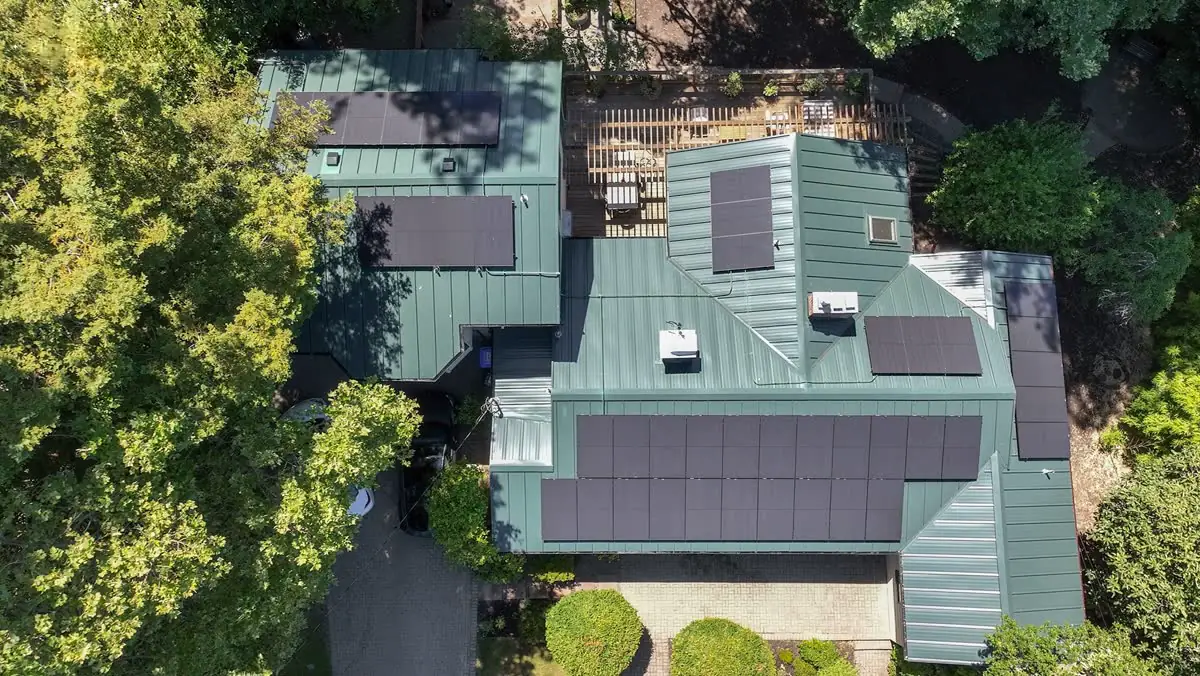
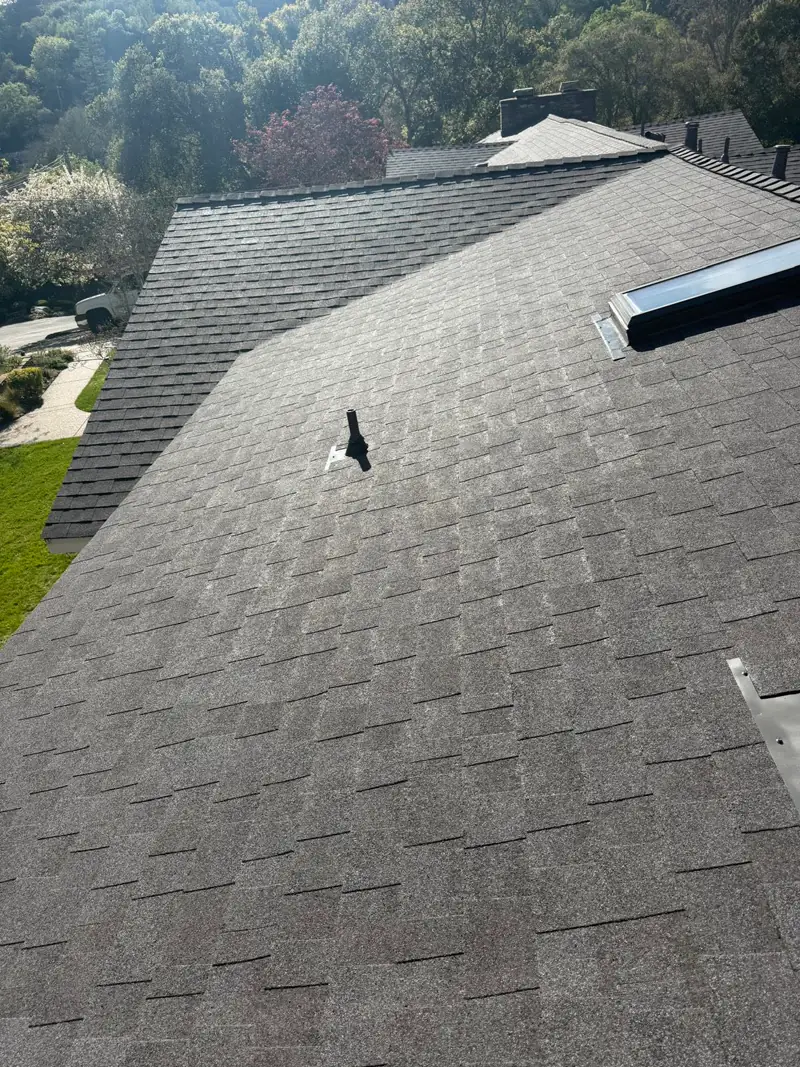
Roofs We're Proud Of

Year workmanship warranty in writing, on top of the manufacturer's warranty on your materials.
Every permit filed by us, every roof built to the Florida Building Code. No forms for you.
The old roof is hauled off and a magnet sweeps the lawn and driveway for nails before we go.
Florida certified roofing contractor CCC1336568, with liability insurance and workers' comp.
Monthly payment options let you replace the roof now and spread out the cost.
Tile Roof Questions from St. Petersburg Homeowners
My Tile Looks Fine but the Ceiling Is Stained. What Is Going On?
Almost always the underlayment. Rain gets between tiles on every tile roof, and the layer underneath carries it off. Once that layer dries out and cracks, the same water reaches the deck. The fix is to lift the tile over the leak, replace the underlayment and set the tile back.
Will You Reuse My Old Tile?
When it is sound, yes. Each piece is lifted by hand, checked and stacked. Cracked or soft pieces get set aside and replaced. If too much of the tile is worn, we will show you the photos and price new tile as one of your options.
Can You Match an Old Clay Barrel Profile?
As closely as current products allow. When the exact profile or color is no longer made, we can move original tile to the street-facing slopes and put the new tile on a back slope where the difference will not show.
Do I Need City Approval to Re-Tile a House in a Historic District?
In a local district or on a local landmark, yes. A Certificate of Appropriateness comes before the roof permit. Like-for-like tile is a staff-level approval. Switching to a different material on a contributing house goes to the Community Planning and Preservation Commission.
Is a Permit Required for a Small Tile Repair in St. Petersburg?
Yes. Roofing is not on the city's exempt list, and the newer small-job exemption leaves roofing out. We pull the permit in our name and schedule the inspections.
Does a Tile Re-Roof Need a Secondary Water Barrier?
Florida's code calls for one whenever a roof covering is removed and replaced, and it lists clay and concrete tile installed to the Florida Building Code as one of the exceptions. Either way, the underlayment is the layer that keeps a tile roof dry, so we lay it to code and photograph it before any tile goes back.
Can I Pay for a Tile Roof Monthly?
Yes. Monthly payment options are available on tile repairs, resets and full re-roofs.

Get Your St. Petersburg Roof Measured, Free.
Enter your address. We'll handle everything else.