Roof Replacement in St. Petersburg, FL:
Every Layer Off, Every Inspection Passed.
Roof replacement in St. Petersburg that starts with a full tear-off and ends with a closed permit. We strip the old roof to bare wood, replace the decking that has rotted, lay a secondary water barrier and install a matched system from one manufacturer, backed by a 15-year workmanship warranty in writing.
Takes about 30 seconds. A local roofing specialist follows up the same business day.
What a Roof Replacement in St. Petersburg Uncovers
Every old roof hides something. Older houses hide more. In the older neighborhoods north of downtown, in Kenwood and around Roser Park, we commonly find wood plank decking instead of plywood sheets. Some houses carry a second roof nailed over the first, left there by a re-roof decades ago. Porch roofs that meet the main roof at an angle often have years of trapped water behind them.
None of that shows from the street, and a roof laid over the top would bury it again. So a roof replacement in St. Petersburg with us is always a full tear-off. Shingles, tile or metal come off, then the underlayment and every older layer, until the crew is standing on bare wood.
Then the deck gets checked board by board. Split and rotted wood is cut out and replaced with new, and the deck is fastened down before anything goes over it. Flashing at chimneys and parapets that has been tarred over for years comes off and gets replaced. Each repair is photographed and posted to your homeowner portal before it disappears under the new roof. You see the actual boards that came out.
On newer homes the tear-off is usually quicker, but we still walk every sheet. Soft spots at the eaves and around old vents are common, and they are cheap to fix while the roof is open.
What Comes Up with the Old Roof
- Wood plank deckingWhat we commonly find on older houses. Split or rotted boards come out and new wood goes in
- Stacked roofsA second or third layer left by an earlier re-roof. We remove every one
- Wet wood at porch tie-insWhere a porch roof meets the house, water often sat for years. Soft sections are cut out
- Patched flashingChimney and parapet metal buried under tar. It gets replaced, not coated again
The Secondary Water Barrier Goes on Every Re-Roof
Florida’s existing-building code is blunt about this one. Section 706.7.2 says that when a roof covering is removed and replaced, a secondary water barrier shall be installed. There are two exceptions: slopes under 2:12 with a continuous roof system, and clay or concrete tile installed to the Florida Building Code.
The barrier sits between the deck and the finished roof. If wind tears away shingles or tile, it keeps rain off the wood and out of the house until the covering is repaired. St. Petersburg saw why that matters in October 2024, when Milton put a 101 mph gust through Albert Whitted Airport.
On top of the barrier we install new drip edge, flashing, pipe boots and vents, followed by a matched roof system from one manufacturer. For more on the shingle side of this, see our shingle roofing page.
Shingles, starter, ridge caps and underlayment from one manufacturer, built to work together
Standing seam panels on clips hidden under the seams, so no screws go through the roof surface
Roof-To-Wall Connections and the City’s Retro Inspection
Some St. Petersburg homeowners are surprised to learn a new roof can involve the walls. Florida’s code, in sections 706.8 and 706.8.1 of the existing-building volume, applies a roof-to-wall rule when three things line up: the roof covering is being replaced, the building has a wood roof deck and sits in the wind-borne debris region, and its insured value or just valuation is $300,000 or more.
When the rule applies, the connections between the roof framing and the walls may need to be strengthened as part of the re-roof. Two limits keep it in proportion. The retrofit can’t raise the reroofing cost by more than 15%, and buildings originally permitted under the Florida Building Code are exempt. The City of St. Petersburg has its own inspection for this work, listed on its inspection request options as “Retro Roof to Wall Connection.” If your house is in scope, we look at the connections once the roof is open, show you what we found with photos, and add any work to the scope only after you’ve seen it.
City or County: Who Permits Your Roof Replacement
Every re-roof needs a permit. Roofing is not on the city’s exempt list, and the new single-family exemption for work under $7,500 names roofing as something it does not cover. Inside city limits, the permit comes from the Building Department’s Construction Services & Permitting Division, and it is filed through the city’s online portal.
During the job the city schedules an In-Progress Roof inspection while the new roof goes on and a Roof Final at the end. Underlayment and sheathing inspections are on its list too. An engineer or architect can also pass the roof inspections by affidavit.
A St. Petersburg mailing address does not always mean a city permit, though. Lealman, Tierra Verde and Feather Sound are unincorporated, so Pinellas County’s Building & Development Review Services issues their permits. Gulfport, South Pasadena and Pinellas Park run their own offices. We look up your parcel on the Pinellas County Property Appraiser’s site before we file, so the application goes to the right desk the first time. See our Lealman and Gulfport pages for those towns.
Either way, we pull the permit in our name, book every inspection and close it out. The closed permit goes into your portal with the contract and the warranty.
Re-Roof Inspections the City Schedules
- In-Progress Roof
- Checked while the new roof is going on
- Roof Final
- The last inspection before the permit closes
- Retro Roof to Wall Connection
- Added when the roof-to-wall rule applies to the house
Flood-Zone Houses and the 49% Line
For homes in the Special Flood Hazard Area, a new roof is part of a larger sum. The city’s floodplain ordinance treats a building as substantially damaged or improved when repairs and improvements together reach 49% of its pre-damage market value. Market value is the Property Appraiser’s structure value, or an independent appraisal.
The city’s substantial improvement package lists re-shingling or re-tiling a roof and roof decking among the costs to count. That matters most on houses that flooded in Helene and now need a roof too, since the roof cost is added to the drywall, the flooring and everything else. A house over the line has to be brought into full compliance, including elevation to the Design Flood Elevation.
We put the roof figure in writing before you sign, so you can add it to the other work and see where the house stands. If storm damage is what brought you here, our storm damage roof repair page covers that side.
Where a Re-Roof Meets the Flood Rules
Historic District Homes Need Approval First
If your house is a local landmark or sits inside one of the city’s local historic districts, a new roof needs a Certificate of Appropriateness before work starts. Roser Park, Granada Terrace, Lang’s Bungalow Court and the small local sections of North Shore and Kenwood are on that list. Most of the Old Northeast is a National Register district only, which adds no local design review by itself.
Replacing a roof with the same material and the same shape is a staff approval. A change in either goes to the Community Planning & Preservation Commission for landmarks and contributing homes. Once approved, the permit has to be pulled within 18 months. The city’s design guidelines favor new materials that match the original in size, shape, color and texture, so the quote we give you lists the product, color and profile your application will ask for.
Before a New Roof in a Local District
- Certificate of AppropriatenessRequired before an exterior change to a local landmark or a home in a local district
- Same material, same shapeA staff approval
- New material or shapeThe CPPC reviews it for landmarks and contributing homes
- After approvalThe permit must be pulled within 18 months
Picking the Right Material
- Architectural shingles fit most pitched roofs in St. Petersburg and give good value for the years they last.
- Standing seam metal costs more and lasts longer, and it holds up well near the bay. See metal roofing.
- Clay or concrete tile belongs on many Mediterranean Revival houses. See tile roofing.
- A low-slope membrane covers flat additions, carports and porches, tied into the main roof. See flat roofing.
A quote can put two of these side by side for the same house. Then you decide with both in front of you.

How a St. Petersburg Roof Replacement Is Priced
The price comes from the roof itself: its area, its pitch, the number of facets, hips and valleys, and the material you pick. We measure all of that from high-resolution imagery before the visit, then confirm it during a free roof inspection with no pushy sales visit.
Three options arrive on your phone, Good, Better and Best, laid out together. Pick one and sign right there. Once we send the quote, that price is locked. Because we buy direct from manufacturers, with no supply house in the middle, the savings land in the quote. Monthly payment options are available.
From Install Day to the Final Inspection
- 01
Measured and Quoted
Your roof is measured from imagery and the options go to your phone.
- 02
Signed and Permitted
You sign, and we file the permit with the city or the county.
- 03
Tear-Off and Deck Repair
The crew strips the roof, replaces bad wood and lays the secondary water barrier.
- 04
New Roof On
Most homes take 1 to 2 days on the roof, with cleanup included before the crew leaves.
- 05
Inspected and Closed
The city’s in-progress and final roof inspections are passed, and the photos, permit and warranty go into your portal.
Your new roof carries our 15-year workmanship warranty in writing, on top of the manufacturer’s warranty on the materials. We are a Florida certified roofing contractor, license CCC1336568, with liability and workers’ comp. Not sure you need a full roof yet? A roof repair may be enough, and the inspection will tell you which.
Roofs We're Proud Of
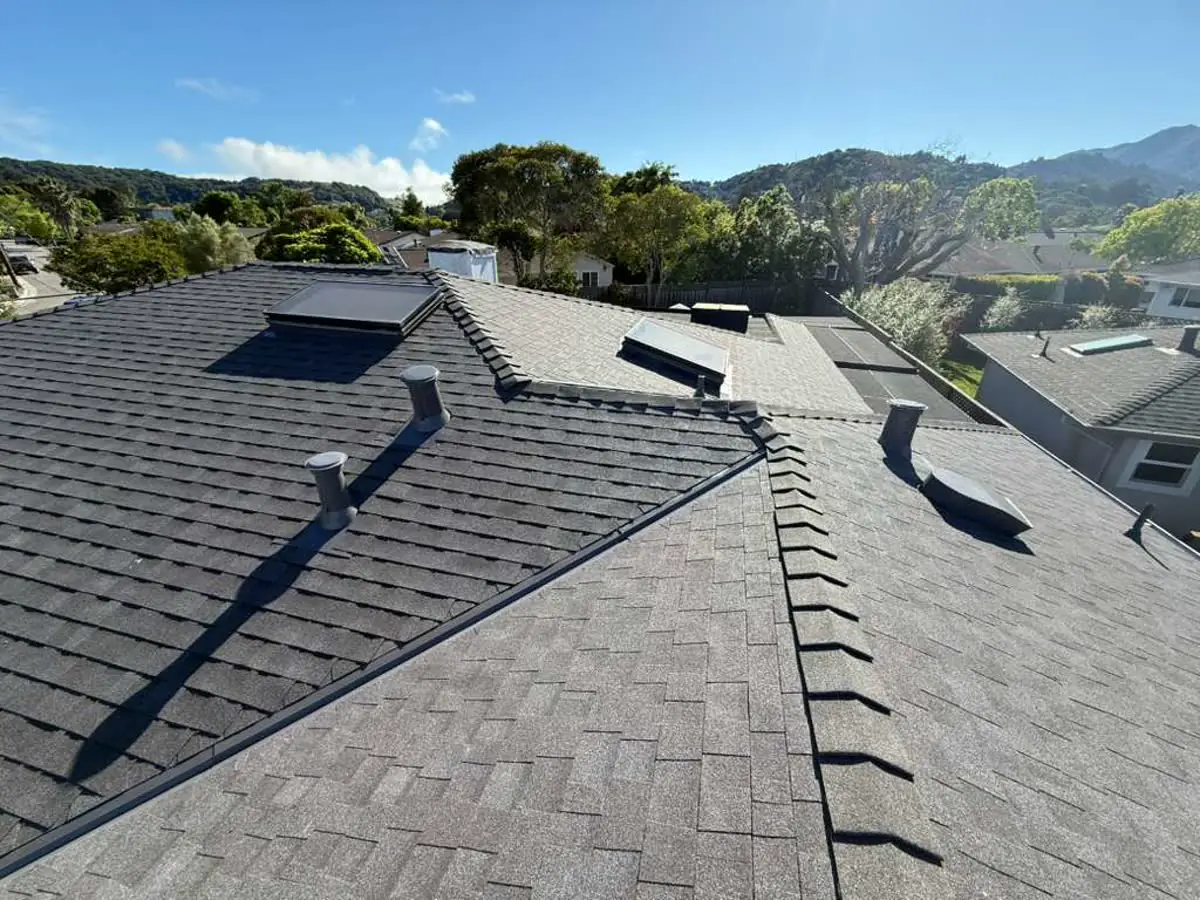
Year workmanship warranty in writing, on top of the manufacturer's warranty on your materials.
Every permit filed by us, every roof built to the Florida Building Code. No forms for you.
The old roof is hauled off and a magnet sweeps the lawn and driveway for nails before we go.
Florida certified roofing contractor CCC1336568, with liability insurance and workers' comp.
Monthly payment options let you replace the roof now and spread out the cost.
St. Petersburg Roof Replacement Questions
Will You Put the New Roof Over My Old One?
No. Every roof replacement we do in St. Petersburg is a full tear-off. A roof laid over another one hides the decking, and on older houses the decking is the part most likely to need work.
What Happens If the Crew Finds Rotten Wood Under the Old Roof?
It gets replaced before anything else goes on. The crew photographs the bad boards or sheets, the photos go into your portal, and the new wood is fastened down before the secondary water barrier is laid.
Does Every Re-Roof Need a Secondary Water Barrier?
Almost every one. The Florida code requires it whenever a roof covering is removed and replaced. The exceptions are low slopes under 2:12 with a continuous roof system, and clay or concrete tile installed to the Florida Building Code.
Will My House Need Roof-To-Wall Straps?
It depends on the house. The rule covers wood-deck buildings in the wind-borne debris region with an insured value or just valuation of $300,000 or more. Homes first permitted under the Florida Building Code are exempt, and the retrofit can't add more than 15% to the re-roof cost.
Can an Engineer Do the City's Roof Inspections Instead?
Yes. The city accepts an engineer's or architect's affidavit for the In-Progress Roof and Roof Final inspections. Most of our jobs use the city's own inspectors, and both results end up in your portal.
I'm in a Local Historic District. Should I Apply Before I Get Quotes?
Get the quote first. The application asks what the new roof will be, so we put the material, color and profile in writing for you. Keeping the same material and shape is the quicker staff approval.
How Long Does a New Roof Take?
Most homes take 1 to 2 days on the roof. The permit comes before that, and your portal shows the date, the crew's photos and the inspection results.
Can I Pay for My Roof Replacement Monthly?
Yes. Monthly payment options are available, and the Good, Better and Best options show them next to each price.

Get Your St. Petersburg Roof Measured, Free.
Enter your address. We'll handle everything else.