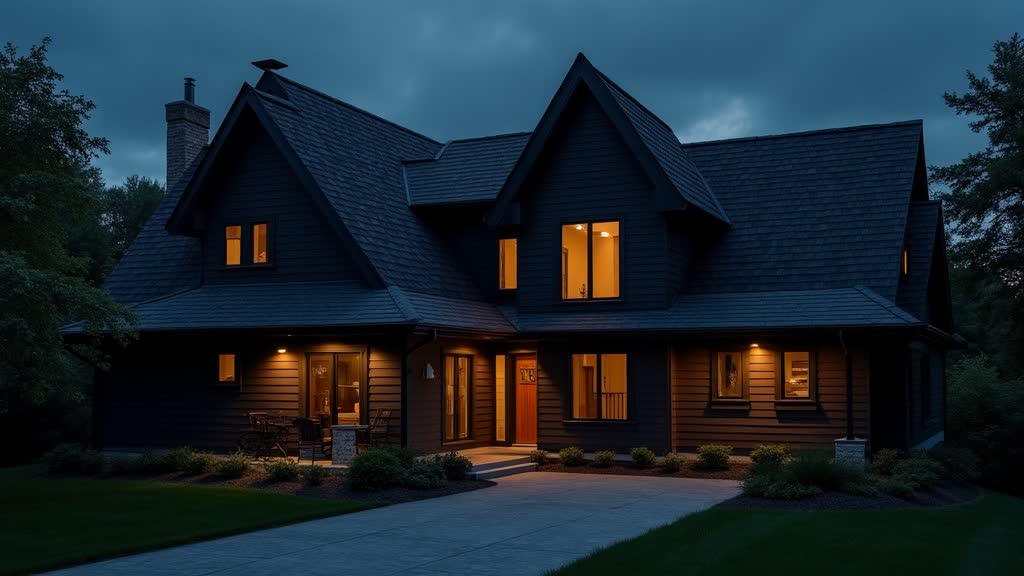
Flat Roof Repair in St. Petersburg, FL:
Low-Slope Roofs Built to Drain.
Flat roof repair in St. Petersburg for the parts of a building that barely slope, from an enclosed porch on an older bungalow to a mid-century house or a two-story storefront downtown. We find out why water stays, repair what can be saved, and rebuild what can't with a membrane made for low slopes.
Takes about 30 seconds. A local roofing specialist follows up the same business day.
Flat roofs have a reputation for leaking, and in St. Petersburg most of that reputation comes from roofs that were never built to drain. A low-slope roof is a sound design. It just leaves no margin for a sagging deck, a clogged scupper or a seam that was lapped the wrong way.
Where a St. Petersburg House Hides a Flat Roof
Walk the alleys behind the older neighborhoods north of downtown and you’ll see it on block after block: a pitched main roof with a nearly flat one tucked behind it. Over the decades, owners closed in back porches, added a bedroom or a laundry room, or turned a carport into living space. The new roof often went on at whatever slope the existing wall height allowed, which was close to none.
Front porches matter here too. Lang’s Bungalow Court downtown, with a period of significance running from 1912 to 1956, is built around houses with wide front porches facing a shared walkway. Porch roofs on bungalows like these are often low enough that water drains slowly, and they meet the house at a wall joint that has to stay sealed through decades of sun.
Then there are the mid-century houses. After World War II, so many of the trainees who came through St. Petersburg stayed that the city ran short of housing, and a lot of building followed. On houses from that building wave we commonly find long, shallow roofs, and some are close enough to flat that shingles were never the right material.
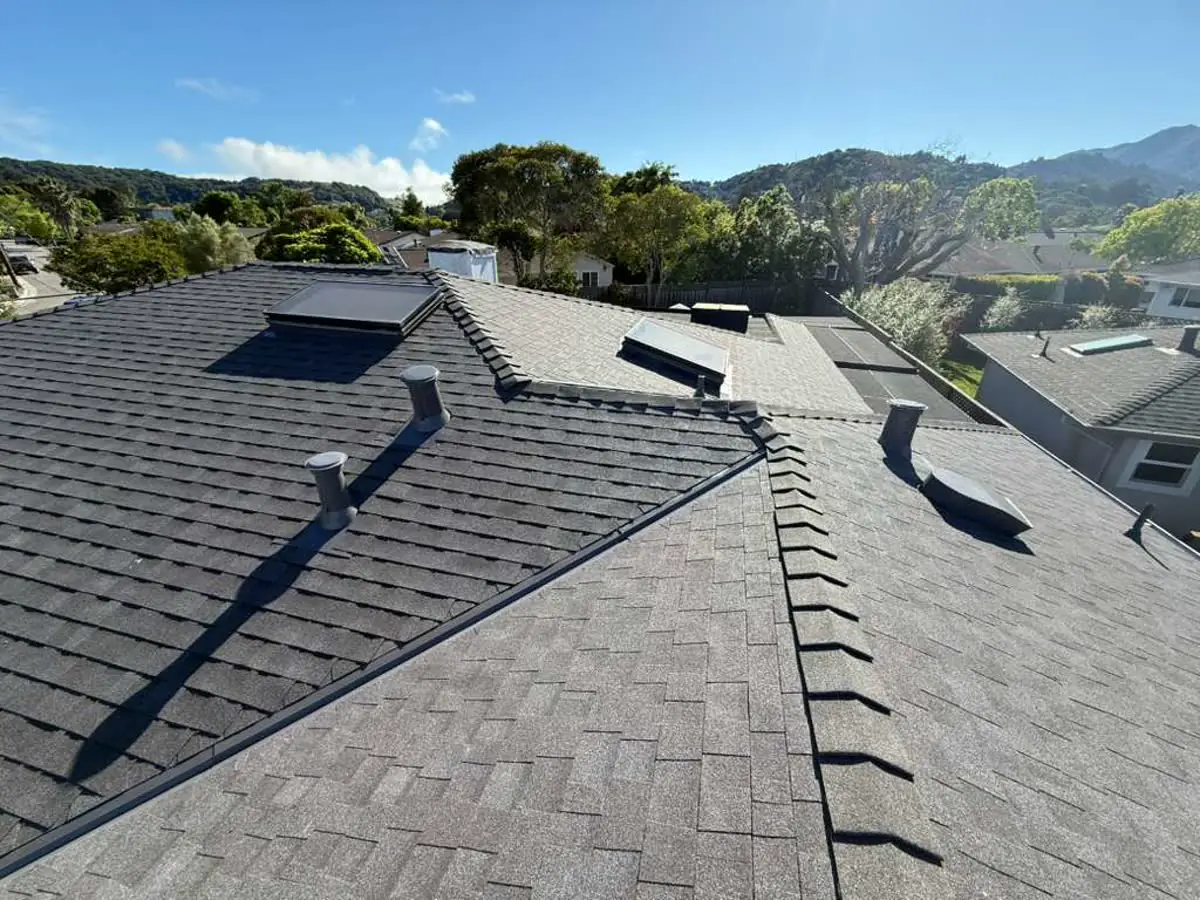
Downtown and Small Commercial Flat Roofs
Downtown St. Petersburg and the older commercial strips are full of low-slope roofs hidden behind parapet walls. From the sidewalk you see a brick or stucco front; on top there’s a flat field, a drain or two and a scupper through the wall.
These roofs fail in their own ways. Parapet caps crack and let water into the wall. Interior drains clog with leaves and debris, and when they do, the water has nowhere to go but up the flashing. Rooftop units sit on curbs that each need their own flashing, and every new pipe or cable someone ran through the roof is another hole to seal.
We handle flat roof repair and replacement on storefronts, small offices and small mixed-use buildings in St. Petersburg. The Downtown St. Petersburg district is on the National Register, and the city says a National Register listing by itself doesn’t restrict a private owner’s alterations unless federal money is involved. Local landmarks and local historic districts are different, and exterior roof work there needs a Certificate of Appropriateness first. For larger buildings, see our commercial roofing page.
Low-Slope Roofs We Work On
- Homes
- Porch and room additions, carports, Florida rooms, mid-century low-slope roofs
- Small commercial
- Storefronts, offices and small mixed-use buildings with parapet walls
- Larger buildings
- See our commercial roofing page
Standing Water After the Afternoon Storm
The 10-year weather archive we use puts St. Petersburg at about 48 inches of rain a year, and roughly 27 of those inches fall from June through September. That is the season of the afternoon storm: a hot morning, clouds stacking up by two o’clock, then a heavy hour of rain. A pitched roof sheds that water in minutes. A flat roof has to move it sideways to a drain, a scupper or an edge.
When it can’t, the water stays. A good working rule is that puddles still sitting about 48 hours after rain mean the roof doesn’t drain the way it should. In summer the next storm usually arrives before that, so a ponded spot on a St. Pete roof can stay wet for weeks at a time.
Standing water does three kinds of damage:
- It wears the membrane. The surface under a puddle heats, cools and stays damp, and it breaks down faster than the rest of the roof.
- It finds the laps. Seams are designed to shed water, not to sit under it. Constant water pressure at a lap will eventually find a gap.
- It adds weight. Water is heavy, and a deck that sags a little holds more of it, which makes it sag a little more.
Fixing ponding means fixing the slope. Low spots can be filled, tapered insulation can be laid to push water toward the drains, and drains or scuppers can be added or enlarged where the structure allows.
- The tie-in Where the flat section meets the main roof, the classic leak point
- Ponding water Low spots hold water after a storm and wear the membrane out early
- The edge and drain Water has to reach the gutter or drain, or it backs up
What One Hour of Rain Does to a Flat Roof
Hurricane Milton gave St. Petersburg a test no flat roof is designed for. According to the Florida Climate Center, the city took 5.09 inches of rain in one hour and 9.04 inches over three, a burst it rated as more than a 1-in-1,000 year event. Albert Whitted Airport logged 18.54 inches for the day.
On a flat roof, rain like that rises faster than a drain can carry it off. Water climbs the wall flashing, spills over the top of base flashing that was set too low, and backs up at scuppers sized for an ordinary storm. A storm like that exposes any flashing that was set too short or any drain that was undersized all along.
So after a big storm, we look at more than the spot that dripped. We check how high the water reached on the walls and curbs, whether the drains were clear, and whether the membrane lifted or split at the edges. Our storm damage roof repair page covers the rest of the house.
Membrane Systems Made for Low Slopes
Every flat roof we install is a membrane system: sheets joined into one continuous waterproof surface, with flashings that turn up walls, curbs and parapets and tie into the edge metal. The right membrane depends on the roof. We look at how much foot traffic it gets, what sits on it, how it drains and how it connects to the pitched roof next to it. Your quote names the system we recommend for your roof and why.
What goes under the membrane matters as much as the membrane. A new low-slope roof starts from a clean, dry deck. Rotted boards or sheathing are replaced, insulation or a cover board goes down where the system calls for it, and tapered pieces are added where the roof needs more slope to drain.
Florida’s code has a detail that applies here. When a roof covering is removed and replaced, a secondary water barrier is required, but slopes under 2:12 with a continuous roof system are an exception. A properly built membrane is that continuous system.
We don’t offer roof coatings. A coating sprayed over a wet roof seals the water in. When a flat roof is past repair, we take it off and rebuild it.
Flat Roof Repair or Replacement: Patch It or Rebuild It
Not every flat roof that leaks needs to come off. A single lap that has opened, a split in the edge metal or a drain boot that has pulled loose on an otherwise dry roof is a repair, and we quote it as one. If water is coming in right now, we stop the active leak first and plan the permanent repair from there.
The deciding question is what’s under the surface. We probe soft spots, take moisture readings and, where needed, cut a small core to see the insulation and deck. If those layers are dry, a repair makes sense. If they’re wet, patching the membrane only traps the water, and the roof keeps rotting from the inside.
Replacement usually wins when we find wet insulation, a soft or sagging deck, blisters spread across the field, or leaks in several places. When a flat section and the main roof are both near the end of their lives, doing them together gets the joint between them right, with one permit and one crew schedule instead of two. Our roof replacement page has more on the pitched side.
What Tips a Flat Roof from Repair to Replacement
- RepairOne open lap, a split at the edge metal or a failed drain boot on a dry, sound roof
- ReplaceWet insulation, soft decking, blisters across the field or leaks in more than one spot
- Rebuild the slopeWater still sitting about two days after rain, every time it rains
The 25% Rule and Flood Zone Limits
Florida limits how much of an old roof can be patched. Under the Florida Building Code’s existing-building section 706.1.1, no more than 25% of a roof or roof section may be repaired, replaced or recovered in any 12-month period unless the whole system or section meets the current code. On a house where the porch roof is its own section, that line can arrive quickly.
There is a state exception. If the roof was built, repaired or replaced under the 2007 Florida Building Code or later, only the portion being worked on has to meet the current code. We check the permit history before we quote, so you know which case applies.
Homes in the Special Flood Hazard Area have a second limit. St. Petersburg uses a 49% rule: when repairs and improvements together reach 49% of the building’s pre-damage market value, the house must be brought into full compliance, which can include elevation. Roofing counts toward that total, and the city wants its Substantial Improvement package once a job reaches 25% of market value.
How Much of a Flat Section Can Be Repaired
Flat Roof Repair Permits in St. Petersburg
Inside city limits, flat roof work needs a permit, including small repairs. Roofing is not on the city’s exempt list, and the small single-family job exemption that took effect July 1, 2026 names roofing as work it doesn’t cover. The permit comes from the Construction Services & Permitting Division, and the city schedules an In-Progress Roof inspection and a Roof Final.
Some addresses that say St. Petersburg sit in unincorporated Pinellas County, where the county issues the permit instead. Looking up the parcel on pcpao.gov settles it. We confirm the jurisdiction, pull the permit in our name and add it to your portal. Nearby, see our pages for Lealman, Gulfport and Kenneth City.
Flat Roof Permits in St. Petersburg
- Inside city limits
- Construction Services & Permitting Division, (727) 893-7231
- Small jobs
- No roofing exemption; the city's small-job form leaves roofing out
- City inspections
- In-Progress Roof and Roof Final
- Unincorporated addresses
- Pinellas County BDRS; check the parcel on pcpao.gov
- Who files it
- We do, in our name
Warranty, Photos and Paperwork
Every new flat roof comes with our 15-year workmanship warranty in writing, on top of the manufacturer’s warranty for the system. The roof is a matched system from one manufacturer, bought direct, so the membrane, flashings and accessories are made to work together.
Before anyone visits, we measure the roof from high-resolution imagery, flat sections and pitched ones. You get Good, Better and Best options to compare and sign from your phone, and the price is locked once it’s sent. Monthly payment options are available.
Flat roofs are built in layers, and each layer gets covered by the next one. We photograph the deck, the insulation, the seams and the flashings as they go in and put those photos in your homeowner portal, with the schedule, the permit, your documents and a message thread. If a storm caused the damage, you get a documented photo report you can share with your insurer; the claim stays between you and your insurance company. Cleanup is included. Need help with a leak somewhere else on the house? Start with roof leak repair or a roof inspection.
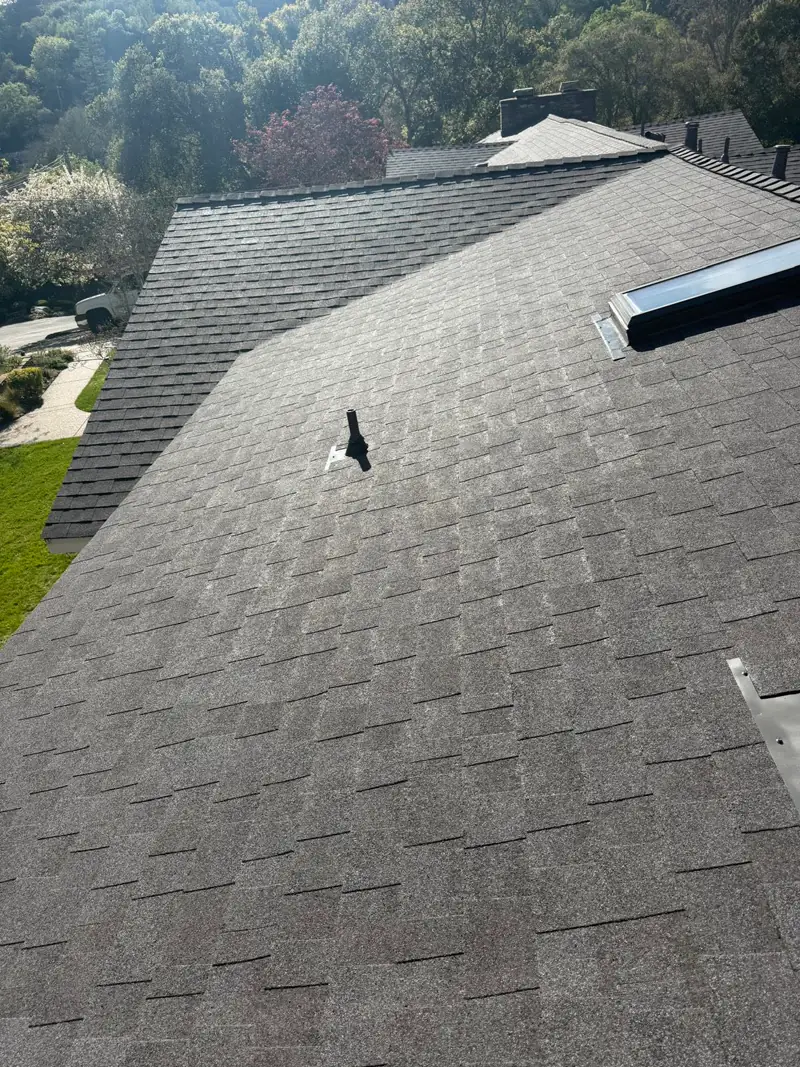
How Flat Roof Repair Works With Us in St. Petersburg
- 01
Send the Address
We measure every section from high-resolution imagery.
- 02
Free Inspection
Drains, seams, edges, walls and the deck checked and photographed, with no pushy sales visit.
- 03
Choose and Sign
A repair quote, or Good, Better and Best replacement options signed from your phone.
- 04
The Work
Permit pulled in our name, roof built from the deck up, cleanup included.
- 05
The Record
Photos of every layer in your portal, and a 15-year workmanship warranty in writing on a new roof.
All work is done under Florida certified roofing contractor license CCC1336568, with liability and workers’ comp coverage.
Roofs We're Proud Of

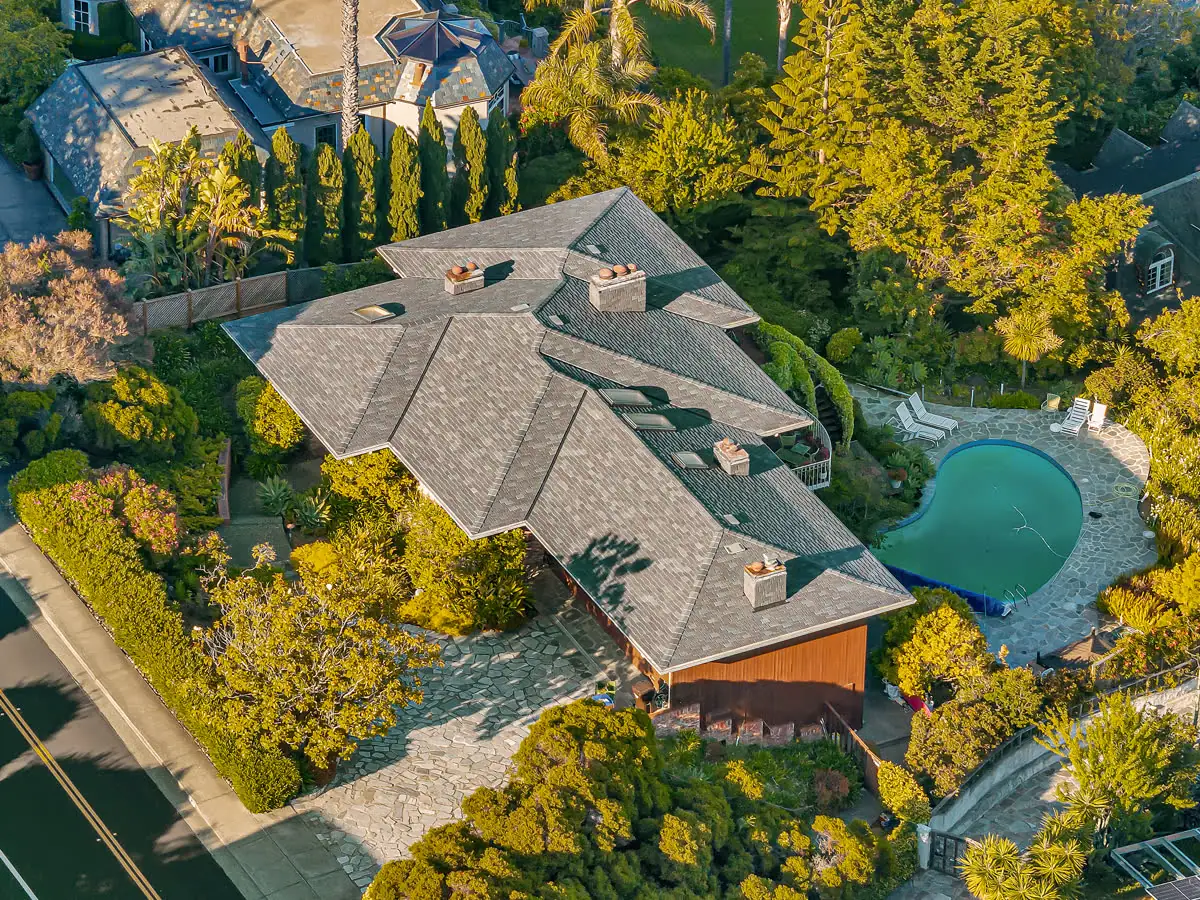
Year workmanship warranty in writing, on top of the manufacturer's warranty on your materials.
Every permit filed by us, every roof built to the Florida Building Code. No forms for you.
The old roof is hauled off and a magnet sweeps the lawn and driveway for nails before we go.
Florida certified roofing contractor CCC1336568, with liability insurance and workers' comp.
Monthly payment options let you replace the roof now and spread out the cost.
Flat Roof Questions from St. Petersburg Owners
How Long Can Water Sit on My Flat Roof Before It's a Problem?
Puddles that are gone by the next day are normal. If the same spots are still wet about 48 hours after rain, the roof has a drainage problem, and the membrane under those puddles will wear out first.
Do You Offer Roof Coatings for Flat Roofs?
No. We repair membranes and install new low-slope roof systems. If a roof has reached the point where someone suggests coating it, we check whether the layers underneath are wet before anything else is decided.
Can You Put Shingles on Our Flat Porch Roof So It Matches the House?
Not on a roof that flat. Shingles shed water by overlapping down a slope, and on a nearly flat surface water backs up under them. The porch gets a membrane that matches the color of the house as closely as the system allows.
Our Storefront Has a Parapet Wall and a Drain in the Middle. Is That Something You Work On?
Yes. Small commercial buildings with parapets, interior drains and scuppers are part of our flat roof work. Larger buildings are covered on our commercial roofing page.
The Roof Over Our Back Addition Is Soft When You Walk on It. What Does That Mean?
Usually that water has been getting into the insulation or the deck for a while. A soft spot is rarely fixed with a patch. We open it, photograph what we find and quote the repair or the replacement based on how far the wet area goes.
Our Home Is in a Flood Zone. Does a New Flat Roof Count Toward the 49% Rule?
It can. The city counts roofing work toward the cumulative cost it compares with the building's market value in the Special Flood Hazard Area, and the rule covers all repairs, not only flood damage. We flag it before you sign.

Get Your St. Petersburg Roof Measured, Free.
Enter your address. We'll handle everything else.