
Roof Leak Repair in St. Petersburg
Find the Way In, Then Close It.
Roof leak repair in St. Petersburg starts above the stain, because the stain on your ceiling is rarely under the hole in your roof. We follow the water back to where it enters, fix that spot, and put photos of the cause and the repair in your homeowner portal.
Takes about 30 seconds. A local roofing specialist follows up the same business day.
Most St. Petersburg homeowners call us about a leak after the second or third time the bucket comes out. By then the stain has spread, someone has already put sealant on the roof above it, and the drip keeps coming back. That pattern almost always means the patch went on the wrong spot.
Roof Leak Repair in St. Petersburg Starts Above the Stain
Water that gets past the roof covering doesn’t fall straight down. It lands on the underlayment or the deck and runs downhill, following a seam in the plywood, the edge of a board or the side of a rafter. It can travel several feet before it finds a nail hole or a gap in the drywall. The brown ring on your ceiling marks the place it finally dropped, not the place it got in.
On the older homes in St. Petersburg this gets harder to read. Board decking is what we commonly find on houses from before the plywood era, and water slips along the gaps between those boards in ways a plywood deck wouldn’t allow. A leak at a vent can show up in a hallway. A gap at a chimney can wet the wall of the next room.
So the first job on any St. Petersburg leak call is to go uphill. We look at the attic side of the decking for dark trails and dried water lines, then go to the roof and work up the slope from the stain until we find where the water enters.
Summer Storms That Push Rain Sideways
St. Petersburg gets about 48 inches of rain in a typical year, based on a 10-year weather archive for the city. In summer, afternoon storms build fast over the peninsula and the bay. What hurts a roof in those storms is the wind behind the rain.
A storm gust drives rain across the roof instead of down it. Water gets pushed up under shingle tabs, behind step flashing and into the top of a wall joint that would stay dry in a calm shower. That’s why a lot of leaks we see in St. Pete only show up in certain storms, and only on one side of the house.
Hurricane Milton showed what a heavy burst can do. The Florida Climate Center reported 5.09 inches of rain in one hour in St. Pete and 9.04 inches in three hours, which it called more than a 1-in-1,000 year event. Gutters and valleys can’t carry that much water, so it backs up at the roof edge and finds every weak point at once. For damage that goes past a single leak, see our storm damage roof repair page.
Low-Slope Roofs and Flat Additions
Plenty of St. Petersburg houses carry a roof that is barely pitched, or a flat section added later: a closed-in porch, a Florida room, a back bedroom or a carport turned into living space. These sections leak in different ways from a steep roof.
- The tie-in. The joint where a flat roof meets the house or slides under the main roof takes runoff from above every time it rains. When the flashing there fails, water runs straight into the wall.
- Ponding. If the deck has sagged even a little, water sits for days after a storm. Membranes and roll roofing wear out fastest under standing water.
- Seams and edges. Laps open up as the material ages in the sun, and metal edge trim pulls loose where wind gets under it.
- Shingles on too little slope. Shingles need enough pitch to shed water. On a very low roof, wind-driven rain gets under them easily.
Some of these leaks are a seam or a flashing repair. Others mean the flat section itself is worn out. Our flat roofing page covers the systems we use when it needs replacing.
- The tie-in Where the flat section meets the main roof, the classic leak point
- Ponding water Low spots hold water after a storm and wear the membrane out early
- The edge and drain Water has to reach the gutter or drain, or it backs up
Older Homes: Flashing, Chimneys and Tile
The older neighborhoods north of downtown and the historic districts have their own leak points. Chimneys and parapet walls are common, and the flashing around them has often been coated with tar many times over instead of being replaced. Each new coat hides the gap for a season.
In Granada Terrace, on Coffee Pot Bayou, the city’s design guidelines note that many Mediterranean Revival houses have Spanish tile roofs or parapet caps. Tile itself rarely leaks. The underlayment beneath it does, and the caps on top of a parapet wall can let water straight into the wall if the joints crack. The fix is usually to lift the tile in the leaking area, replace the underlayment and reset the tile. More on that on our tile roofing page.
If your house is a local landmark or sits in a local historic district, exterior roof work needs a Certificate of Appropriateness. Under the city’s approval matrix, a repair with the same materials and shape is a staff approval. Changing either one can go to the Community Planning & Preservation Commission for landmarks and contributing properties. We plan the repair around that.

How We Trace a Leak to the Source
Before we come out, your roof is measured from high-resolution imagery, so we already know its slopes, valleys and penetrations. On site we start inside, at the stain, and move to the attic. Then we go up.
We work uphill from the stain and check every likely entry: pipe boots, roof vents, skylights, the metal at walls and chimneys, valleys, and every joint where one roof section meets another. When we find the spot, we photograph it before anything is touched, so you see the same thing we see.
Sometimes the answer isn’t the roof at all. An air conditioning drain line that has backed up, or moisture collecting in an attic without enough airflow, can wet a ceiling on a sunny day. If that’s what we find, we tell you and show you the photos. You won’t pay for a roof repair you don’t need.
What We Check, in Order
- The ceiling and the atticWater trails on the decking and framing above the stain
- Penetrations uphillPipe boots, vents and anything else cut through the roof
- Metal at the wallsStep flashing, counterflashing, chimney and parapet caps
- Joints between roofsWhere a porch, addition or flat section meets the main roof
- Things that aren't the roofAn AC drain line or attic sweat that wets a ceiling on a dry day
Roof Leak Repair Permits in St. Petersburg
Inside St. Petersburg city limits, roofing repairs need a permit. The city’s rule covers anyone who plans to repair or replace regulated work, and roofing is not on its list of exempt items. The newer permit exemption for small single-family jobs, under Florida HB 803, names roofing as excluded. So there is no small-leak exception in the city.
After a storm the rule is the same: the city requires a permit for all storm-damage repair, while emergency tarping does not need one. Permits are filed through the city’s online portal, and storm repairs go in under the “Storm Related Damage” class.
Not every St. Petersburg address is in the city. Lealman, Tierra Verde and Feather Sound are unincorporated, so Pinellas County permits roofs there. If you’re not sure, look the address up on pcpao.gov. We check it before we quote, and we pull the permit in our name either way. See our pages for Lealman, Tierra Verde and Feather Sound.
If the house is in a flood zone, keep the city’s 49% rule in mind. Roofing counts toward the cumulative repair total the city tracks against your home’s market value, and it applies to all repairs, even when flooding didn’t cause the damage.
Leak Repair Permits at a Glance
- Inside city limits
- A permit for roofing repairs, issued by the city's Construction Services & Permitting Division
- Small-job exemption
- The city's newer exemption form leaves out roofing by name
- Storm damage
- All storm repair work needs a permit; emergency tarping does not
- St. Pete address, county parcel
- Pinellas County permits it; check the address on pcpao.gov
- Who pulls it
- We do, in our name, and the permit goes into your portal
Repair or Replace: Florida’s 25% Rule
A single leak on a sound roof is a repair, and we quote it as one. We’ll tell you when a roof is past that point. Signs include shingles that crack when lifted, soft decking in more than one place, or leaks on several slopes.
Florida’s code adds a hard line. Under the Florida Building Code’s existing-building rules, no more than 25% of a roof or roof section can be repaired or replaced in any 12-month period unless the whole roof or section meets the current code. There’s an exception: if the roof was built, repaired or replaced under the 2007 Florida Building Code or later, only the part being worked on has to meet the current code.
When the numbers point to a new roof, you get Good, Better and Best options for a roof replacement to sign from your phone, with the price locked once it’s sent. Every new roof is a matched system from one manufacturer, bought direct, with a 15-year workmanship warranty in writing on top of the manufacturer’s. Monthly payment options are available.
Roof age matters for insurance too. Under Florida law, an insurer can’t refuse to write or renew a policy solely because a roof is less than 15 years old. For an older roof, an inspection showing at least five years of useful life left keeps the age alone from being the reason.
Patch the Leak or Replace the Roof?
Photos of the Hidden Layers in Your Portal
Leaks live under things: under tiles, under shingles, under flashing, under the deck. Every leak repair gets photos of the entry point, the damaged layers once they’re open, and the finished fix.
Those photos go into your homeowner portal along with the schedule, the permit, your documents and a message thread with us. If the leak came from a storm, the same set makes a documented photo report you can share with your insurer. The claim itself stays between you and your insurance company.
Need more than a leak fixed? Our roof repair and roof inspection pages cover the rest.

How Roof Leak Repair Works With Our St. Petersburg Team
- 01
Send Your Address
We measure the roof from high-resolution imagery before the visit.
- 02
We Trace the Leak
Ceiling, attic and roof checked, with the entry point photographed. The inspection is free.
- 03
You Approve the Repair
The quote covers the repair, and you sign from your phone with no pushy sales visit.
- 04
We Fix It
Permit pulled in our name, cleanup included.
- 05
You Get the Record
Before and after photos land in your portal.
All work is done under Florida certified roofing contractor license CCC1336568, with liability and workers’ comp coverage.
Roofs We're Proud Of

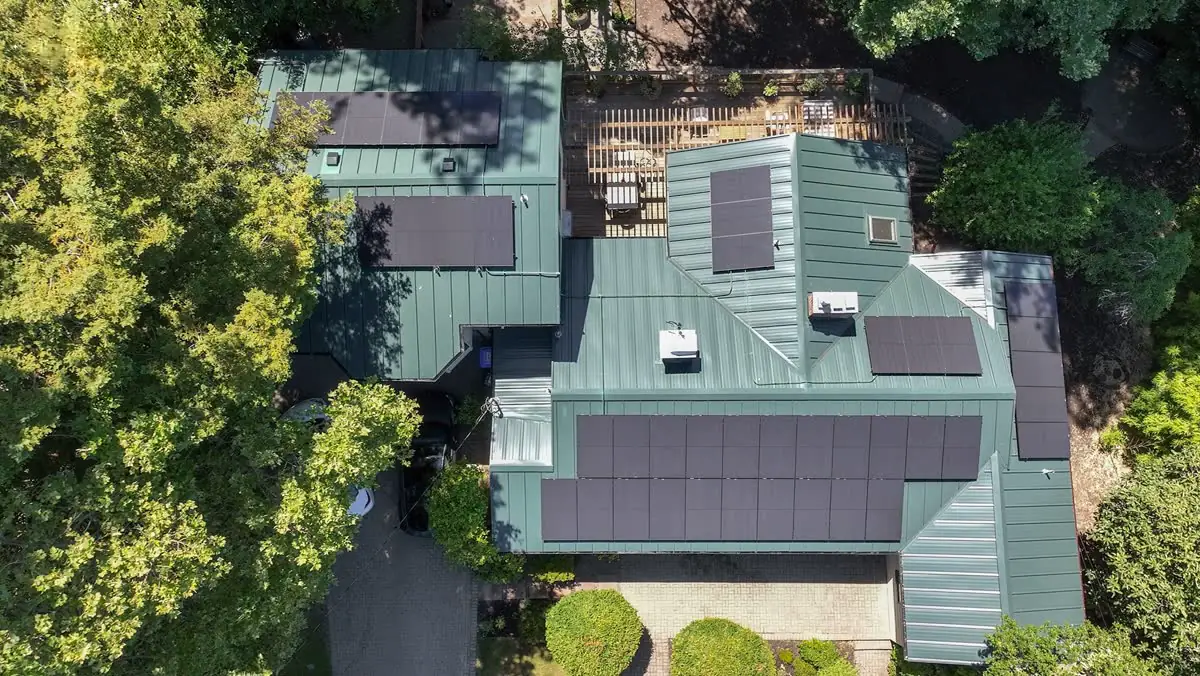
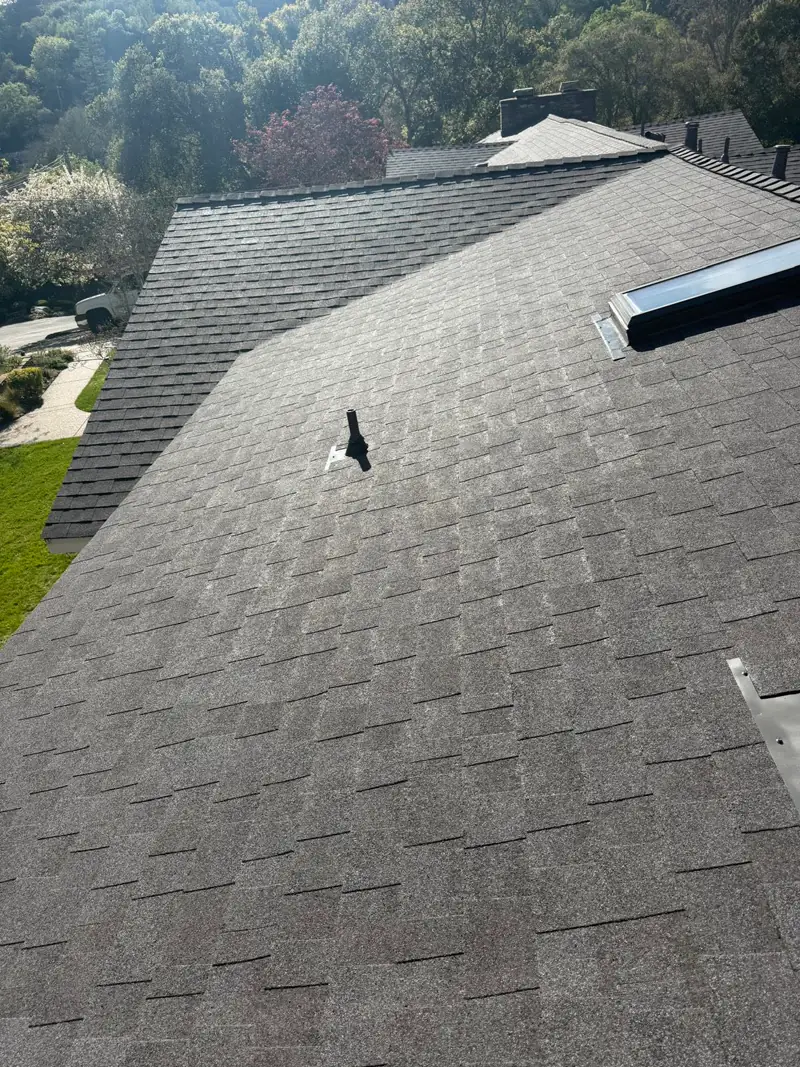
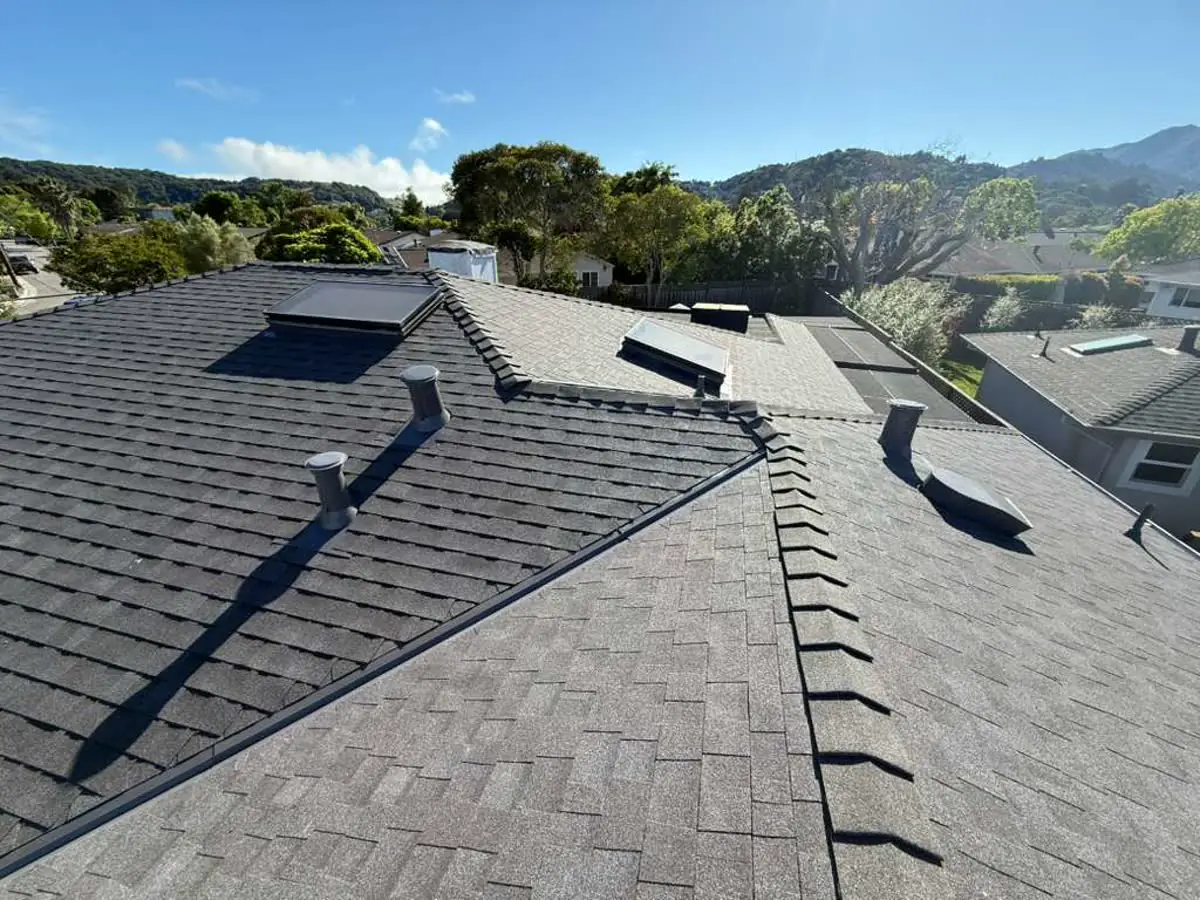
Year workmanship warranty in writing, on top of the manufacturer's warranty on your materials.
Every permit filed by us, every roof built to the Florida Building Code. No forms for you.
The old roof is hauled off and a magnet sweeps the lawn and driveway for nails before we go.
Florida certified roofing contractor CCC1336568, with liability insurance and workers' comp.
Monthly payment options let you replace the roof now and spread out the cost.
St. Petersburg Roof Leak Questions
Does a Small Leak Repair in St. Petersburg Need a Permit?
Inside city limits, yes. Roofing isn't on the city's list of exempt work, and the newer exemption for small single-family jobs names roofing as something it doesn't cover. We pull the permit in our name as part of the repair.
My Mail Says St. Petersburg, but I Think I'm in Lealman. Whose Rules Apply?
If the parcel is in unincorporated Pinellas County, the county issues the permit, not the city. The quickest check is to look up the address on the Pinellas County Property Appraiser's site, pcpao.gov. We confirm it before we quote.
The Flat Roof Over Our Back Room Leaks Every Summer. Is It the Flat Part?
Often it's the joint where the flat roof meets the house, not the middle of the flat section. That seam takes water from the main roof every time it rains. We check the tie-in, the seams and any spot where water sits for days.
Our Home Is in a Local Historic District. Can You Still Fix the Leak?
Yes. The city needs a Certificate of Appropriateness for exterior roof work in a local district, and repairs with the same materials and shape are a staff approval under the city's matrix. Changing the material or shape can go to the preservation commission for landmarks and contributing homes.
Can You Tarp It Now and Do the Repair Later?
A tarp is often the right first move after a storm. The city doesn't require a permit for emergency tarping, but the repair that follows does need one.
A Storm Caused Our Leak. What Do You Give Us for Insurance?
A documented photo report of the damage and the repair, which you can share with your insurer. The claim itself stays between you and your insurance company.

Get Your St. Petersburg Roof Measured, Free.
Enter your address. We'll handle everything else.