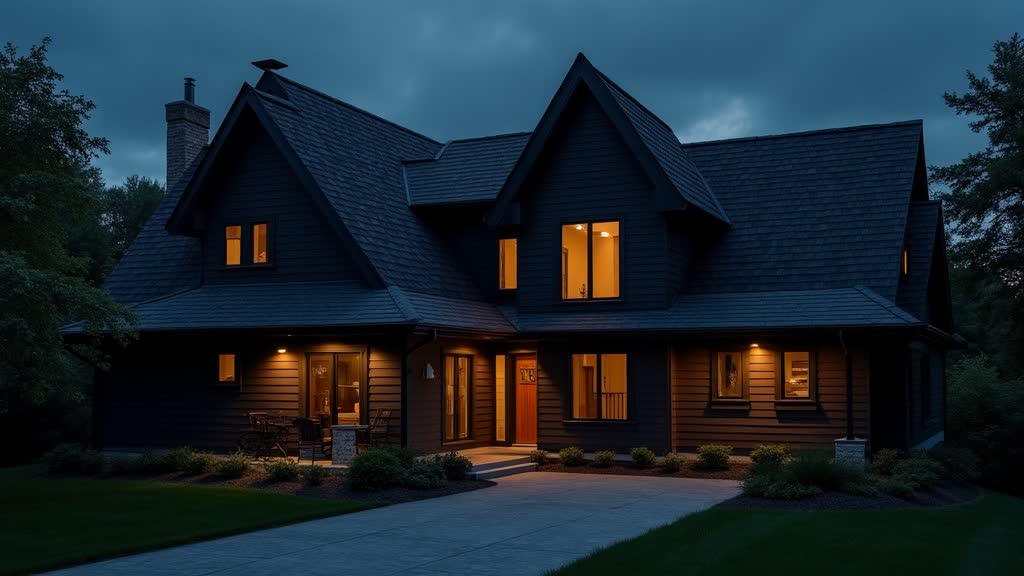
Metal Roofing in St. Petersburg, FL:
Picked for How Close You Live to the Bay.
Metal roofing in St. Petersburg, with the panel metal, finish and fasteners chosen by how far the house sits from salt water. Every metal roof carries a 15-year workmanship warranty in writing on top of the manufacturer's, and your quote shows standing seam and shingle for the same roof so you can compare real numbers.
Takes about 30 seconds. A local roofing specialist follows up the same business day.
Metal Roofing in St. Petersburg Starts Near the Bay
A lot of St. Petersburg homes sit on canals, bayous and filled bay land like Snell Isle, which opened in 1925. That is where metal roofing makes its best case. A standing seam roof sheds rain in a hurry, holds its edges in hard wind, and has no field of exposed screws waiting to loosen.
It also costs more than shingle. So the useful question isn’t whether metal is good. It’s whether metal is right for your house, at your distance from salt water, for as long as you plan to own it. This page walks through how we answer that for homes across St. Petersburg, from the bayfront to the inland neighborhoods. If you already know you want a full replacement and aren’t sure of the material, our roof replacement page covers the wider decision.
How Far You Live From Salt Water Changes the Metal
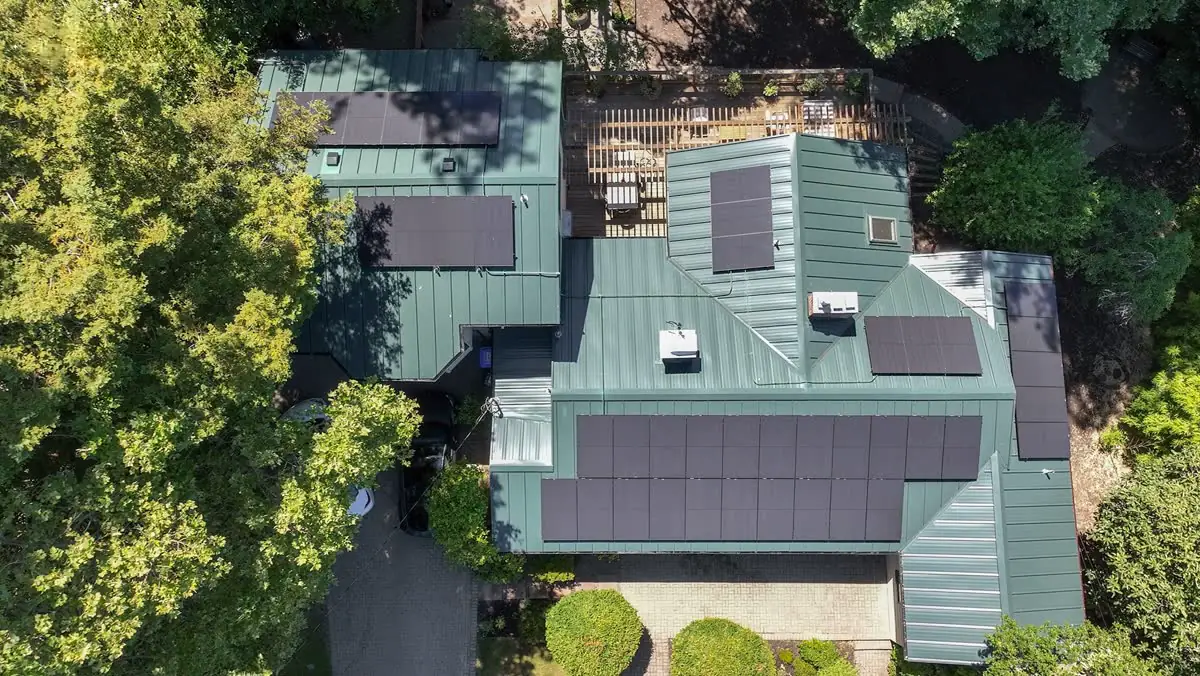
Two metals do almost all of the residential work here: aluminum and coated steel. Steel is stronger for its weight and costs less. Aluminum doesn’t rust, which matters when the roof gets misted with salt most mornings.
For a house right on Tampa Bay, a bayou or one of the canal streets, we usually price aluminum panels with stainless fasteners. Move a few blocks back and coated steel with a coastal-grade finish becomes a sound choice. In the inland parts of St. Petersburg, a standard finish on coated steel is usually enough.
The finish matters as much as the metal under it. Coastal finishes hold color longer in hard sun and resist chalking, and their warranty terms often depend on how close the house is to salt water. We put the exposure on your quote so the panel, finish and warranty all line up with your actual address, not the general idea of “near the beach.” Island homes in towns like St. Pete Beach and Tierra Verde sit at the far end of that scale.
Matching the Metal to the Address
- On the water or a bay islandAluminum panels and stainless fasteners, coastal-grade finish
- A few blocks back from the bayCoated steel can work with a coastal finish and stainless trim screws
- Inland neighborhoodsCoated steel with a standard finish is usually enough
- Any addressOne metal family for panels, trim and flashing so nothing reacts
Fasteners, Trim and the Small Parts That Fail First
Salt rarely eats through a good panel first. It goes after the pieces around it. Bare cut ends at the eave, a pipe flashing with dried-out sealant, a galvanized screw in an aluminum trim piece: those are the places a coastal metal roof starts to fail.
So we build the whole roof from one metal family. Aluminum panels get aluminum trim, flashing and drip edge, held with stainless screws. Steel roofs get matching coated trim. Where two different metals have to meet, such as an old copper vent or a steel chimney cap, we separate them so they can’t react.
We also look hard at the penetrations. Vents, plumbing stacks and skylights are where water finds its way under any roof. On a metal roof near the water, the boots and sealants around them are chosen for salt and sun, and they show up in the photos in your portal before the panels go over them.
Where a Coastal Metal Roof Starts to Go
- Cut panel ends
- Bare edges at the eave and rake rust before the face does
- Pipe and vent flashings
- Sealant dries out in sun and salt, then lets water track in
- Dissimilar metals
- Copper, bare steel and aluminum touching each other corrode fast
- Screws and washers
- The weakest point on any screw-down panel roof
Standing Seam or Screw-Down Panels
Drive around St. Petersburg and you’ll see two kinds of metal roof.
Screw-down panels, often called 5V crimp or ribbed panels, are fastened through the face of the metal. A typical house has hundreds of those screws, each sealed by a rubber washer. Over years of Florida sun the washers shrink and crack. Near the bay the screw heads rust too. Every one of them is a small hole in the roof that has to stay sealed.
Standing seam works differently. Each panel runs in one piece from ridge to eave, and the raised edges of neighboring panels lock together into a seam. Clips hidden under those seams hold the panels to the deck, so no fastener goes through the surface you see. The clips also let the metal grow and shrink through hot days and cool nights without pulling at anything. It’s the only metal roof we put on.
Low-Slope Roofs on Postwar Block Homes
St. Petersburg grew fast after World War II, when many of the trainees who passed through the city stayed. A lot of the homes from that era are concrete block ranches with shallow roofs, and we commonly find low-slope sections and flat additions on them that were never meant to hold standing water.
Metal can work on those roofs, but only the right metal. A shallow pitch drains slowly, so water sits at the seams longer. Low slopes call for a standing seam panel with taller seams that are mechanically locked, not just snapped together, and careful detailing where the roof meets a wall. Screw-down panels are a poor fit here. Every slow-draining minute is more time for water to find a washer that has let go.
Some sections are simply too flat for any metal panel. When that’s the case, we say so, and the quote prices a proper low-slope system for that part instead. Our flat roofing page covers those systems, and a mixed roof with metal on the pitched sections and a membrane on the flat back room is a common result.
- The tie-in Where the flat section meets the main roof, the classic leak point
- Ponding water Low spots hold water after a storm and wear the membrane out early
- The edge and drain Water has to reach the gutter or drain, or it backs up
Wind After Milton
Milton came ashore two weeks after Helene. Albert Whitted Airport, on the edge of downtown St. Petersburg, measured a peak gust of 101 mph. Across the city, the roof damage that followed tended to start at the same places: edges, corners and ridges, where wind pulls hardest.
A standing seam roof is only as strong as its attachment. Clip spacing tightens toward the edges and corners, where uplift is greatest. Eave and rake trim gets fastened so the wind can’t get a lip under it. Ridge caps are secured to the panels and the deck, not just sealed. These are the details that decide whether a roof is still there after a storm like Milton, and they’re the ones we photograph before they’re covered.
If your current roof took wind damage and you’re deciding what comes next, our storm damage roof repair page covers repair first. Metal makes sense when the damage is part of a pattern and you’d rather not do this again after the next season.
Metal Roofing on a St. Petersburg Historic Home
Changing to metal on an older house is not just a material choice in parts of St. Petersburg. If the home is a local landmark, or sits in a local historic district such as Roser Park, Granada Terrace or one of the Kenwood sections, any change to the roof needs a Certificate of Appropriateness first. City code names roof changes as one of the first examples.
What happens next depends on the house. Keeping the same material and the same roof shape can be approved by city staff. Changing the material, say from shingle to metal, goes to the Community Planning & Preservation Commission when the house is a landmark or a contributing property. For a non-contributing property, staff can approve the change. Staff may still approve a commission-level item if the application meets every standard. Either way, the roof permit has to be pulled within 18 months of approval.
Be realistic about the odds. The city’s design guidelines recommend replacing worn roofing with matching materials, so a switch to metal on a contributing house is a harder case to make. National Register listing on its own, as in most of Old Northeast and all of Kenwood outside its local sections, brings no local design review for private work. We check which group your address falls in before we quote metal.
Switching to Metal on a Historic House
- Landmark or contributing propertyMaterial change goes to the Community Planning & Preservation Commission
- Non-contributing property in a local districtCity staff can approve the change
- Same material and same shapeStaff approval, contributing or not
- National Register onlyNo local design review on its own
Flood Zones, the 49% Rule and a New Metal Roof
Helene’s surge reached 6.31 feet above normal high tide at the St. Petersburg gauge, the highest in a record that goes back to 1947, and neighborhoods like Shore Acres, Coquina Key and Venetian Isles were under bay water. Many of those homes are where metal makes the most sense. They’re also where the city’s 49% rule applies.
In the Special Flood Hazard Area, St. Petersburg adds up every repair and improvement to a building. If the total reaches 49% of the structure’s pre-damage market value, the house is treated as substantially damaged or improved and has to be brought into full compliance, elevation included. The rule applies even if the damage didn’t come from flooding. Re-roofing and roof decking both count toward the total, and a job at 25% or more of market value needs the city’s substantial improvement package.
Metal costs more than shingle, so on a house that is already carrying other repairs, that difference can matter. We put the roof figure in writing early so you can see where the house stands before you choose.
St. Petersburg's Flood-Zone Line
Metal and Shingle Priced Side by Side
Most people asking about metal really want to know if it’s worth the extra money. We’d rather show you than argue it.
Your roof is measured once, from high-resolution imagery, and then priced both ways: standing seam and architectural shingle, same house, same deck work, same underlayment. You see Good, Better and Best options on your phone, sign the one you want, and the price is locked once it’s sent.
Metal tends to win when the house is close to salt water, when you plan to stay a long time, or when the shingle roof you’re replacing has needed repair after repair. Shingle tends to win when the budget matters most right now, when you may sell within a few years, or when a historic review would make metal a long shot. Put on over a re-nailed deck with good underlayment, shingle still makes a solid roof, and our shingle roofing page covers it. Monthly payments help too, because the extra cost of metal gets spread across years instead of landing at once.
What Goes Under the Panels
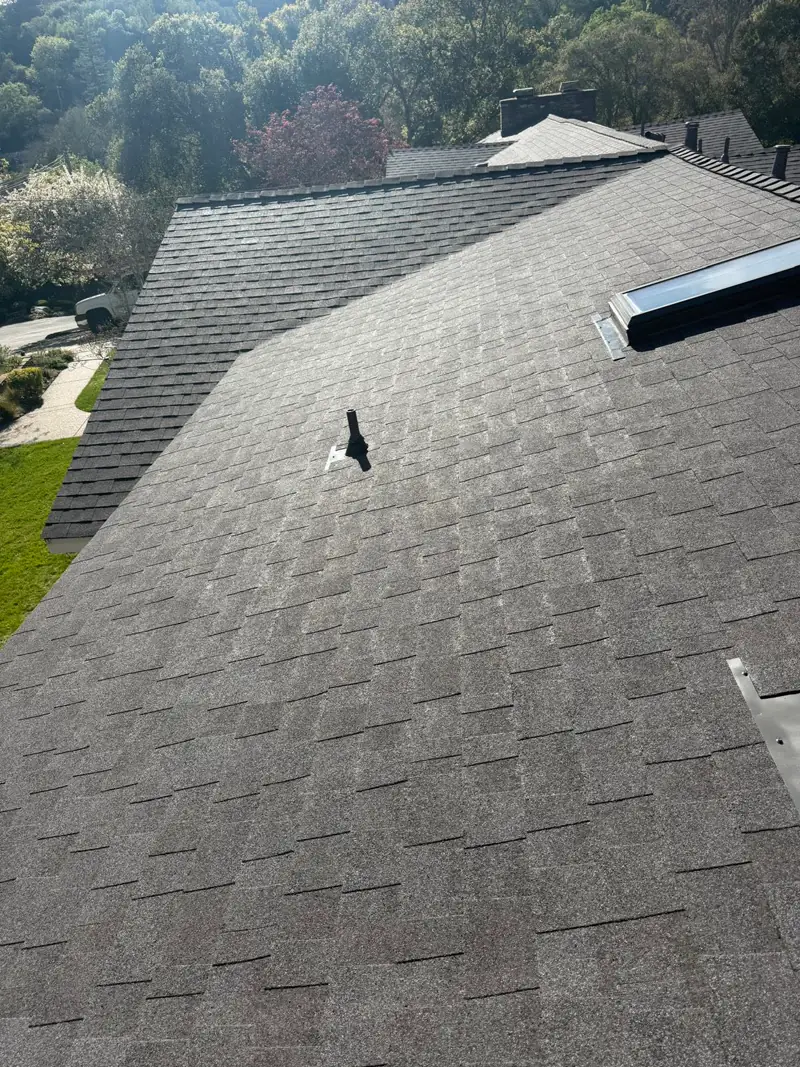
The metal is the part you see. The work under it decides how long it lasts.
- The old roof comes off, down to the deck. We don’t lay metal over shingles.
- The decking is checked, rotted wood is replaced, and the deck is re-nailed to current fastening rules.
- Florida code requires a secondary water barrier whenever a roof covering is removed and replaced, so it goes down across the whole deck.
- On wood-deck homes valued at $300,000 or more in the wind-borne debris region, the code can also require roof-to-wall connection upgrades, capped at 15% of the re-roof cost. We tell you if your house qualifies.
- Flashing, drip edge and trim in the same metal as the panels, then the panels, clipped to the deck.
- The yard is cleaned and swept with a magnet for nails, then the city does its Roof Final inspection.
The permit is pulled in our name. Inside city limits it comes from the City of St. Petersburg’s Building Department. Lealman, Tierra Verde and Feather Sound go through Pinellas County, and towns like Gulfport and South Pasadena run their own. Because we buy direct from manufacturers, the panels, trim and underlayment come as a matched system from one manufacturer.
How Metal Roofing in St. Petersburg Works With Us
- 01
Send Your Address
Your roof is measured from high-resolution imagery before anyone visits, and we note how close it sits to salt water.
- 02
Free Inspection
We confirm the measurements, check the slope, the decking and the flashing, and look up whether the house sits in a historic district or the flood zone. There’s no pushy sales visit.
- 03
Compare and Sign
Metal and shingle side by side, Good, Better and Best, signed from your phone with the price locked once sent.
- 04
Installed and Warrantied
Panels on, yard cleaned up, and a 15-year workmanship warranty in writing on top of the manufacturer’s. Your portal holds the schedule, the photos of every hidden layer, your documents and your messages with us.
We’re a Florida certified roofing contractor, license CCC1336568, with liability and workers’ comp coverage.
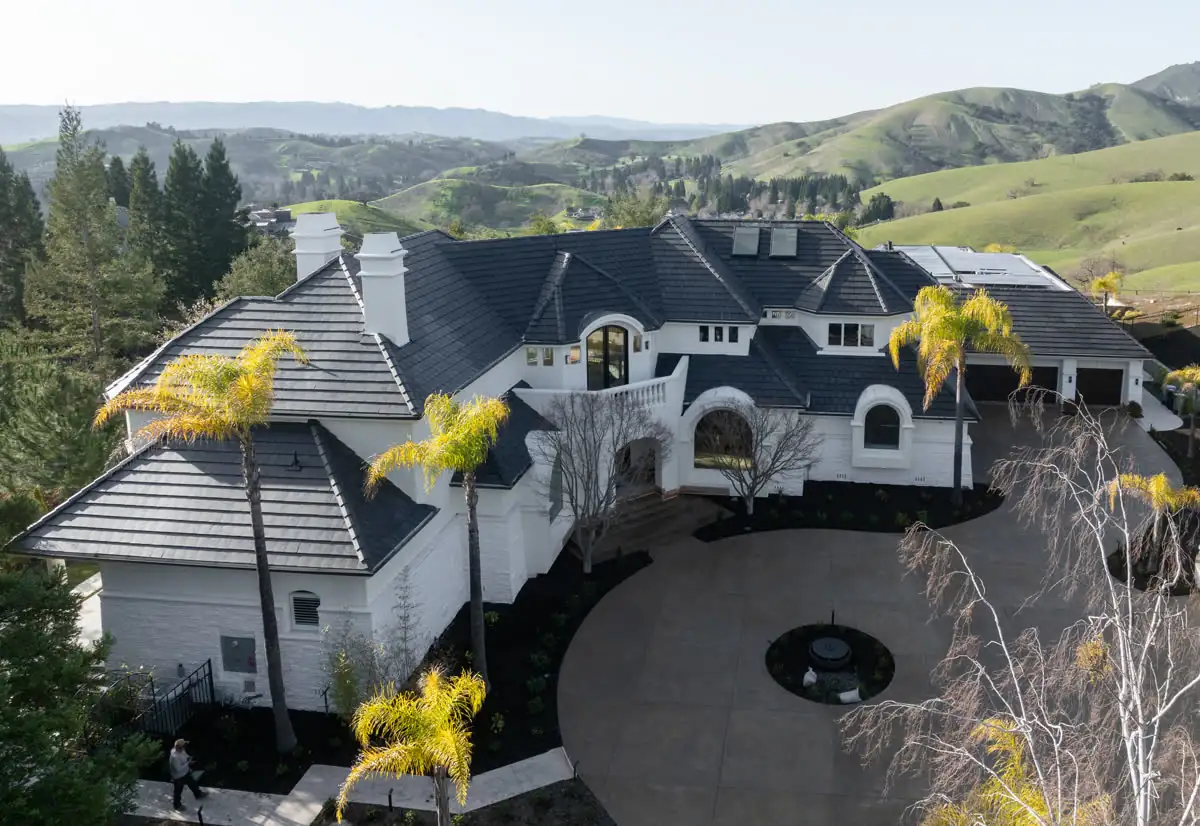
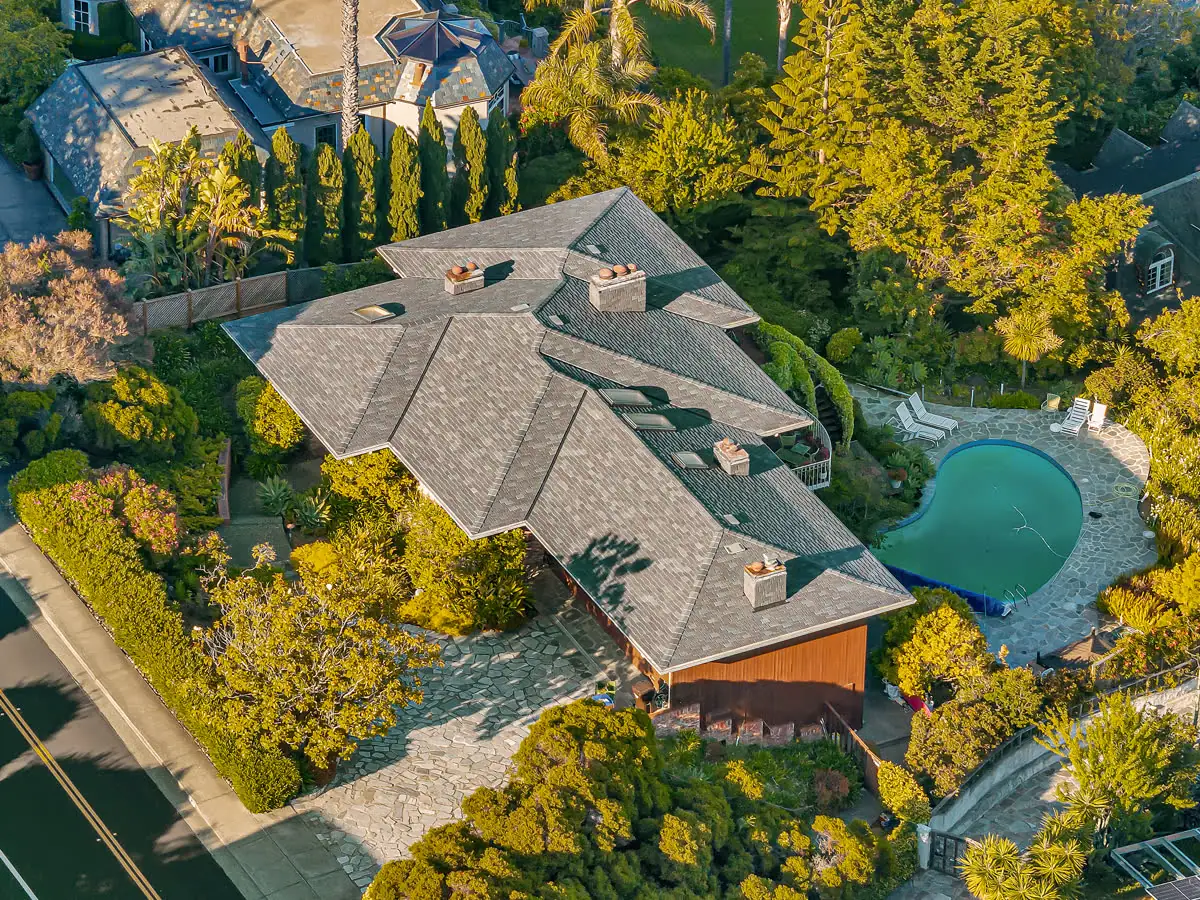
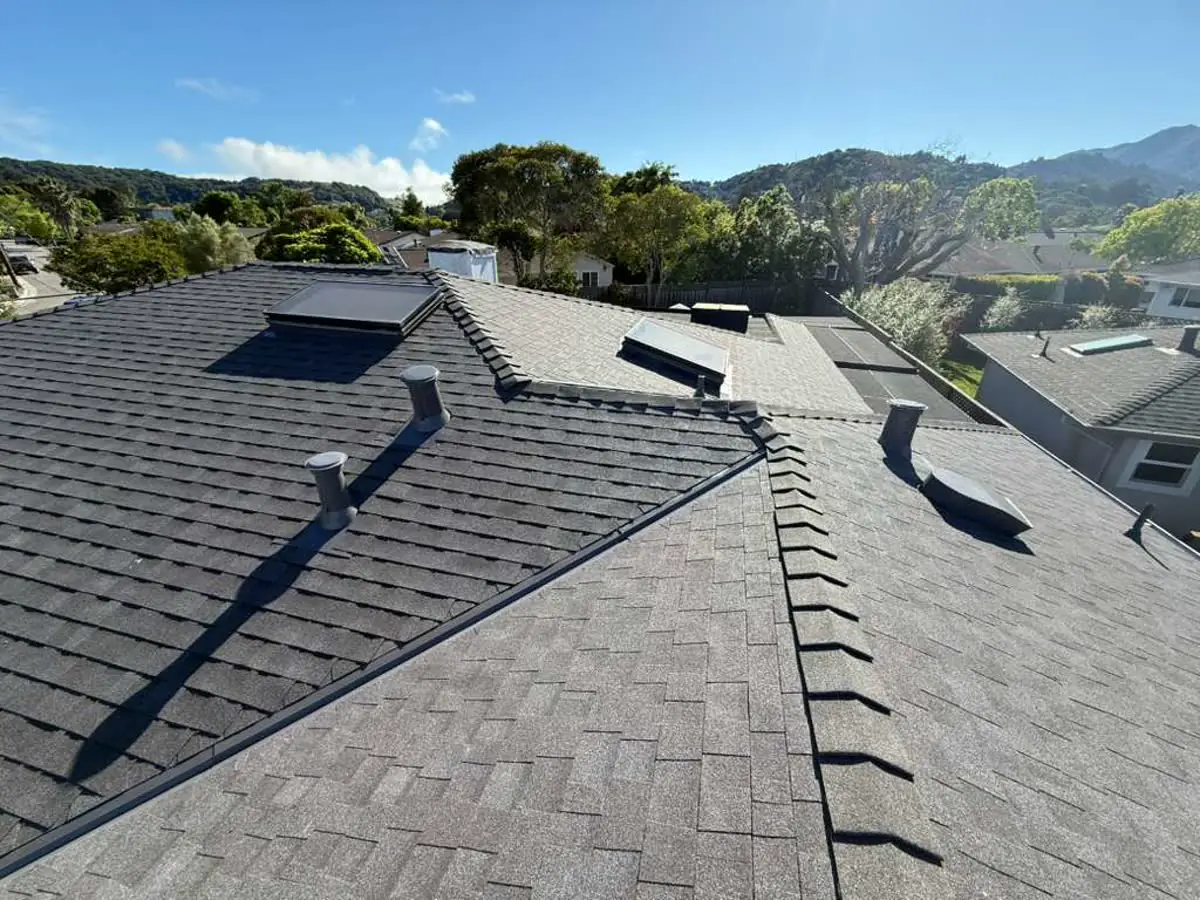
Roofs We're Proud Of
Year workmanship warranty in writing, on top of the manufacturer's warranty on your materials.
Every permit filed by us, every roof built to the Florida Building Code. No forms for you.
The old roof is hauled off and a magnet sweeps the lawn and driveway for nails before we go.
Florida certified roofing contractor CCC1336568, with liability insurance and workers' comp.
Monthly payment options let you replace the roof now and spread out the cost.
Metal Roof Questions from St. Petersburg Homeowners
Our House Backs Onto Coffee Pot Bayou. Does It Need an Aluminum Roof?
For a home on the water, aluminum panels are usually the safer choice because aluminum doesn't rust the way steel does in constant salt spray. A few blocks inland, coated steel with a coastal finish often holds up fine and costs less. We tell you which one we'd use and why on the quote.
Can a Metal Roof Go on Our 1950s House with the Nearly Flat Roof?
Often, yes, but not with any panel. Shallow roofs need a standing seam panel built for low slopes, with seams that are locked tight rather than just snapped together. If the pitch is too low for metal, we say so and price a flat roof system instead.
Why Not the Screw-Down 5V Panels My Neighbor Has?
Screw-down panels are fastened through their face, and each screw relies on a rubber washer that ages in the sun. Near the bay the screws themselves also corrode. Standing seam keeps every fastener under the seam, out of the weather. We install standing seam.
We're in a Local Historic District. Can We Switch from Shingle to Metal?
It's possible, but it isn't automatic. A change of roof material on a landmark or contributing house goes to the Community Planning & Preservation Commission, and the city's guidelines favor matching the original material. We tell you up front which path your house is on before you spend anything.
Our Home Is in the Flood Zone. Does a Metal Roof Count Toward the 49% Rule?
Yes. The city counts re-roofing and roof decking toward the substantial damage total, together with any other repairs. A metal roof costs more than shingle, so we put the roof figure in writing early to help you see where the house stands.
Is a Metal Roof Noisy in a Summer Storm?
Quieter than most people expect. The panels sit on solid decking and full underlayment rather than open framing, and the attic absorbs the rest, so a downpour sounds a lot like it does under shingle.
Can We Spread the Cost of a Metal Roof Out?
Yes. Monthly payment options are available, which takes some of the sting out of metal's higher price up front.
Get Your St. Petersburg Roof Measured, Free.
Enter your address. We'll handle everything else.